Category: Uncategorized

  • Adoption Themes and Disney Movies

    It’s blase and unoriginal for parents to complain about Disney movies constantly killing off parents.  But I’ve been seeing all these old films in a new light, watching them again as an adoptive parent with my children.  There’s a new flavor coming through, always present but previously imperceptible to me. The themes and messages present in many of these child-oriented films have a different impact on an adopted child, different both in scale and in kind.  Sometimes it’s makes a positive message more meaningful, and other times it makes the low notes more distressing.

    The key point I want to emphasize is that a “negative adoption theme” and a “sad moment” in a movie are not necessarily the same thing.

    I’m walking through the Disney movies I have personal familiarity with and re-evaluating them as an adoptive parent.  Some of these I watched as a child, and some of them I’ve watched recently. Obviously others are going to be missing, as my experience is not all-encompassing.  Did I leave out any big ones in your experience? Let me know comments!

    Spoilers ahead if you care.

    Cinderella

    A loving single father dies in the exposition.  Our soon-to-be princess is left in the care of a verbally abusive and neglectful stepmother.  She lives in a house with two bullying step-siblings.

    This is all sad in its own right.  But there’s a subversive theme here for adoptive children that you’ll see crop up a few places in this list.  It boils down to “man, Protagonist, your birth family was much better, doesn’t it suck that you lost them?” This is, to put it mildly, not the best message you want to put out there when you’re struggling every day to build attachment.

    The distinction between “step child” and “adopted child” is blurry enough that we can trust kids to make the link.  Cinderella is consistently treated like a second class citizen in her new family, and winds up befriending animals to combat her loneliness.

    The Little Mermaid

    I’m sure if I were bothered to search for it, I could dig up an explanation for what happened to Ariel’s mother.  She is neither seen nor mentioned. But we see plenty of her father. Upon being defied, he turns violent, prompting her to run away from home.

    And running away?  That totally works out for her in the end.  I want to drill in on this, because it comes up more tha once.  Foster children are particularly at risk for running away from home.  https://www.sciencedirect.com/science/article/pii/S019074091730720X

    So, I get a little twitchy when I see “running away” as the solution to the character’s problems.  And once you see it, it keeps rearing its head as a recurring theme.

    Beauty and the Beast

    Everybody’s favorite film about Stockholm Syndrome, it turns out, doesn’t have a lot to say about the subject of family.

    Addendum: the live-action remake did find it necessary to tack on tragic parental loss backstories for both Belle and the Beast, so knock that version down a couple pegs.

    Aladdin

    What’s most striking about his parents is their absence.  There’s only one brief mention of the fact that he is an orphan.  The movie doesn’t touch on familial themes at all. I mean, the Sultan seems like a decent enough guy?

    Given how the rest of this list goes, a complete lack of adoption themes is not the worst possible outcome.  No news is good news if the rest of the news is fucking tragic.

    The Lion King

    Simba watches his own father die violently, and then is made to feel like it’s his fault by his murderous uncle.  He copes with this loss by running away from home, which (again!) turns out just fine for him in the end.

    No to all of this.  And I say this knowing that it’s still my favorite Disney movie.  Sometimes the truth hurts.

    Frozen

    Good lord, Disney.  Both parents killed off, on-screen, before we even make it out of the exposition.  Is that a record? It’s a shame, because eventually the story drives home the immense value that sisterhood can have.  And again, the protagonist runs away from home in a state of emotional distress, which turns out fine.

    Tangled

    The protagonist is kidnapped from her birth family as a baby.   Her kidnapper assumes the role of her mother, yet is verbally abusive and neglectful.  The story revolves around reuniting Rapunzel with her birth family, but in the process she has to kill her aforementioned surrogate mother.  Oh, and she ran away from home to do it.

    Read the above paragraph from the point of view of an adoptive parent and try not to cringe.  This would be one of the movies that falls into Venn diagram region of Not Overtly Tragic and Negative Adoption Themes.  It’s far from the saddest Disney movie out there, but I can’t think of a worse one for a foster child.

    The Princess and the Frog

    Tiana’s father dies off-screen after a time-skip from the exposition.  However, everybody seems to be coping healthily with it. The movie focuses primarily on internal development of the two protagonists.

    This movie provides an illustrative example of how to handle loss, and family, just right.  The story uses family as a motivation for self-improvement, not as a plot device to build tragedy.


    Inside Out

    This film is actually founded in some pretty real cognitive science behind emotional development, which is probably why it’s actually used as a resource in some forms of cognitive behavioral therapy.  https://psmag.com/social-justice/a-conversation-with-psychologist-behind-inside-out

    What I absolutely love is that, in this movie, running away is not the solution to the protagonist’s problems.  It’s seen as a catastrophic failure.  Something to avoid at all costs.

    I give this one top marks even though ostensibly it isn’t even a movie about adoption, just for how gracefully it handles the theme of family and coping with loss.

    Moana

    Everything was going great.  Both parents make it through to the end of the movie intact.  A grandparent dies offscreen, but it is presented less as tragedy and more as part of a cycle using a reincarnation gimmick.  So far so good.

    But then, we get Maui opening up about his past, telling the story of how his parents didn’t want him, and so they threw him into the ocean.

    So close, yet so far, Disney.  Seriously, the one movie where both parents survive and you have to throw attempted infanticide out of left field.

    Conclusions

    I had to stop here because I realize I’ve embarked on a bit of a fool’s errand in that I haven’t seen every Disney movie ever made and don’t remember all of the ones I’ve seen well enough to comment on them.  I will note that it’s interesting that what’s probably the saddest movie in the collection I’ve reviewed, The Lion King, isn’t the one with the worst adoption themes; that distinction goes to Tangled. Likewise, the most uplifting movie about familial bonds, Frozen, doesn’t have the best themes for adoption; that prize goes to Inside Out, which oddly enough isn’t a movie that even touches the idea of parental loss.


    As always I’m curious what you, dear reader, think about the topic.  Let me know in the comments.
  • The Enemy of Efficiency

    This Make Magazine article is now two and a half years old, but I’m just getting around to really digging into it.  I put a pin in it because I was amazed at the ingenuity and innovation on display. Here we have brilliant engineers advancing a common goal with simple materials.  And I became a bit crestfallen when I realized this level of reuse would not find traction in the US.

    I’m starting to wonder if the true enemy of efficiency is plenty.  Moore’s Law and automation keep pushing prices downward, while we continue to externalize the negative impacts of nonrenewable resource consumption, waste disposal, and pollution.

    My local Makerspace had been hosting a Repair Cafe style event on a monthly basis.  I’ve noticed we’ve had a challenge getting traction on the concept. Could this be a symptom?  Why bother taking the valuable time to repair a plastic toy, broken tool, or damaged electronic device when a small sum of money can make the problem just disappear?

    A disposable culture only works if you have the resources to support replenishing discarded goods.  Those living in poverty don’t have that luxury. But, neither does this planet. Interest in electric vehicles wane when gas is $2.00/gal, but every gallon burned still incurs an unseen cost.

    My lament here is due to the fact that efficiency gains should never be so easily dismissed when we live in a world with limited resources, even if we’ve temporarily obfuscated that scarcity via low prices.  No matter how cheap goods may become, our time is finite.

    If I want to replace the battery on my current smartphone, I have to remove the damned screen.  And to be honest, I don’t see this as some sort of underhanded conspiracy by tech moguls to push us to buy more disposable goods.  The market wants devices that are small, thin, light, and well-integrated. The market didn’t want devices that are modular and easy to replace.  In the end, we got what we asked for.

  • Families


    All this talk about “Families Belong Together” raises complicated feelings for me.

    It’s not because I lack outrage at the humanitarian crisis that has taken hold at our border.  I’m not conflicted about that at all. No, I’m wary because the simple fact of the matter is, if all families were kept together, mine would not exist.

    So, I had to do some serious thinking.  I want to be able to tell the activists marching in the street that I do agree that family separation as an immigration policy is abhorrent, without following a toxic self-reflective whataboutism back to myself.  How do I square my place in this debate with my place in a system that separates children as part of its mission.

    To satisfy this contradiction, I had to think back to my training.  Yes, training. All foster-adoptive parents in Massachusetts have to attend a MAPP training course.  Stephanie and I did, and it is not an exaggeration to say that this program changed our lives forever.  Their mission is simple.

    “DCF trains foster parents so they have the skills needed to nurture children who have experienced trauma and to work in partnership with birth families.”

    This is a 30-hour series of small-group classes in which experienced social workers break it all down.  We learned about the legal complexities of the foster system. We learned coping skills, for yourself and your future children.  We learned about the wide variety of potential medical, education, and emotional complications we may face. We learned how to move forward as a family, together.  Throughout the process, one crucial fact was drilled into us: separation is deeply  traumatic.  As adoptive parents it becomes our mission to help our children navigate this trauma, and try as best as we can to pave the road towards attachment and permanence.

    But, if we know the process is deeply traumatic, and we know the scars from that trauma will last forever, why does it happen?  The sole reason any child protective service intervenes so severely is to protect the well-being of children.  To save lives.  That’s the bar that must be cleared.  Otherwise we’re inducing lifelong suffering without cause.

    The children who were separated at the border during this shameful episode?  They weren’t separated because their lives were in danger. They weren’t separated to shield them from abuse or neglect.  Depending on who you ask, they were separated to reduce the flight risk of asylum-seekers, to send a deterring message across the globe, or just to piss off the libs.  None of those justifications, not a single fucking one of them, clears the bar.

    Children are separated in this country, by decree of the government, every day.  But the difference between a humane system and a cruel one is that the former does so when it must, while the latter does so when it can.


  • The Eighth Hunt

    For three years running now I’ve been making Mia a scavenger hunt for her birthday to lead her to one of her presents.  I thought this year I’d actually show it off.

    Each clue is in an envelope marked with a number and a letter.  We’ll come back to why later. The first clue, as always, is sitting and waiting on the kitchen table.  There are eight envelopes for her eighth birthday. I’ll probably break that pattern some time before her 18th birthday.

    The clues are mostly written on pieces of green paper.  Because we had a bunch of green typing paper.

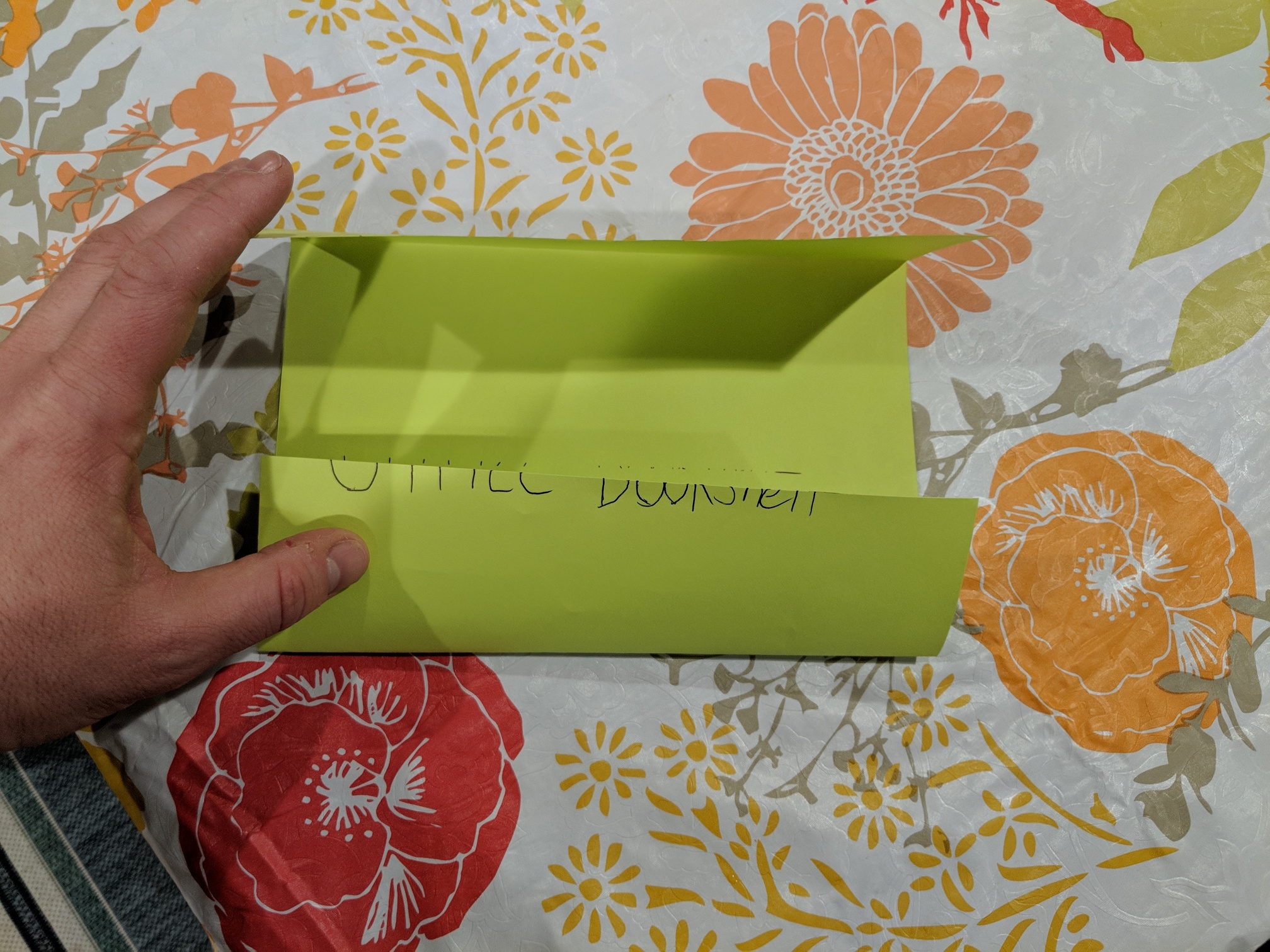
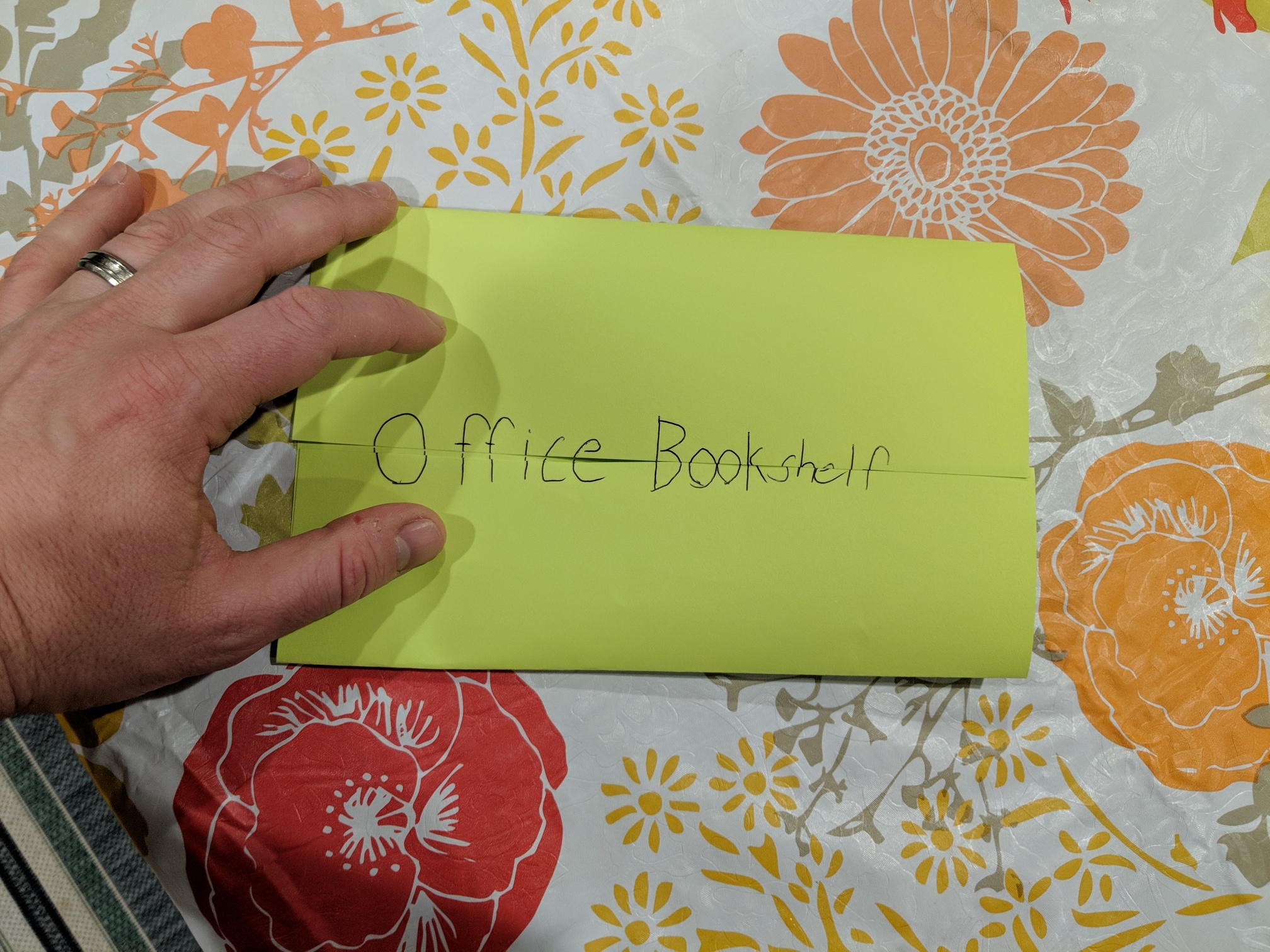
    The first clue just says “fold me” in the middle, with some hopefully-unreadable lines written on the top and bottom reverse side.

    Fold it just right, and you get this. She got this without any assistance! Off to a great start!


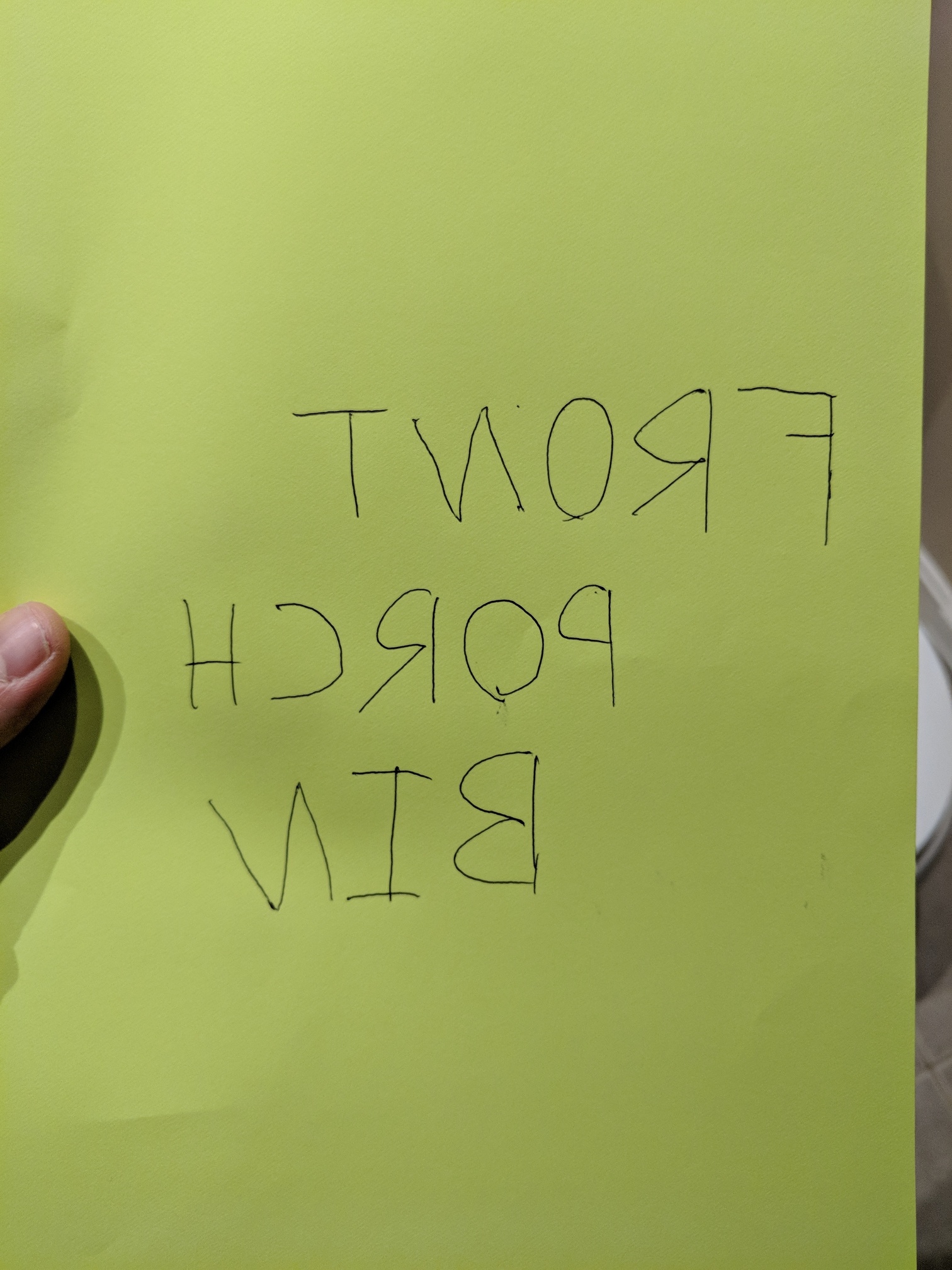
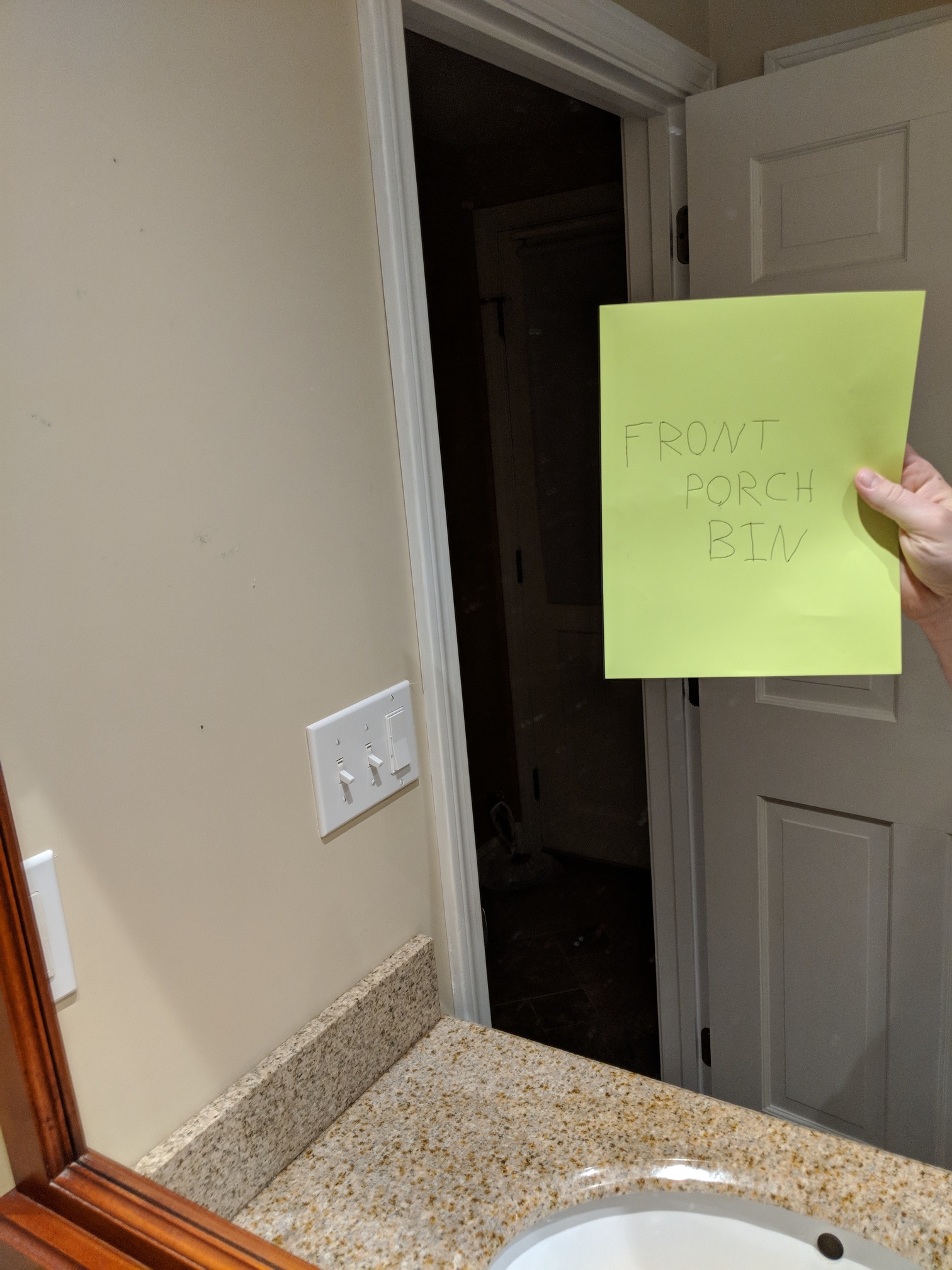
    The second clue is written backwards, and requires the use of a mirror to read.

    She hit her first snag here.  She kept trying to figure out what it said without using a mirror.  I realize that the idea of “mirrors make things backwards” might not be the first thing that comes to mind when a kid sees backwards writing.  And the clue is solvable without one, just harder. Mommy might have given her a little guidance to take the clue to the bathroom.

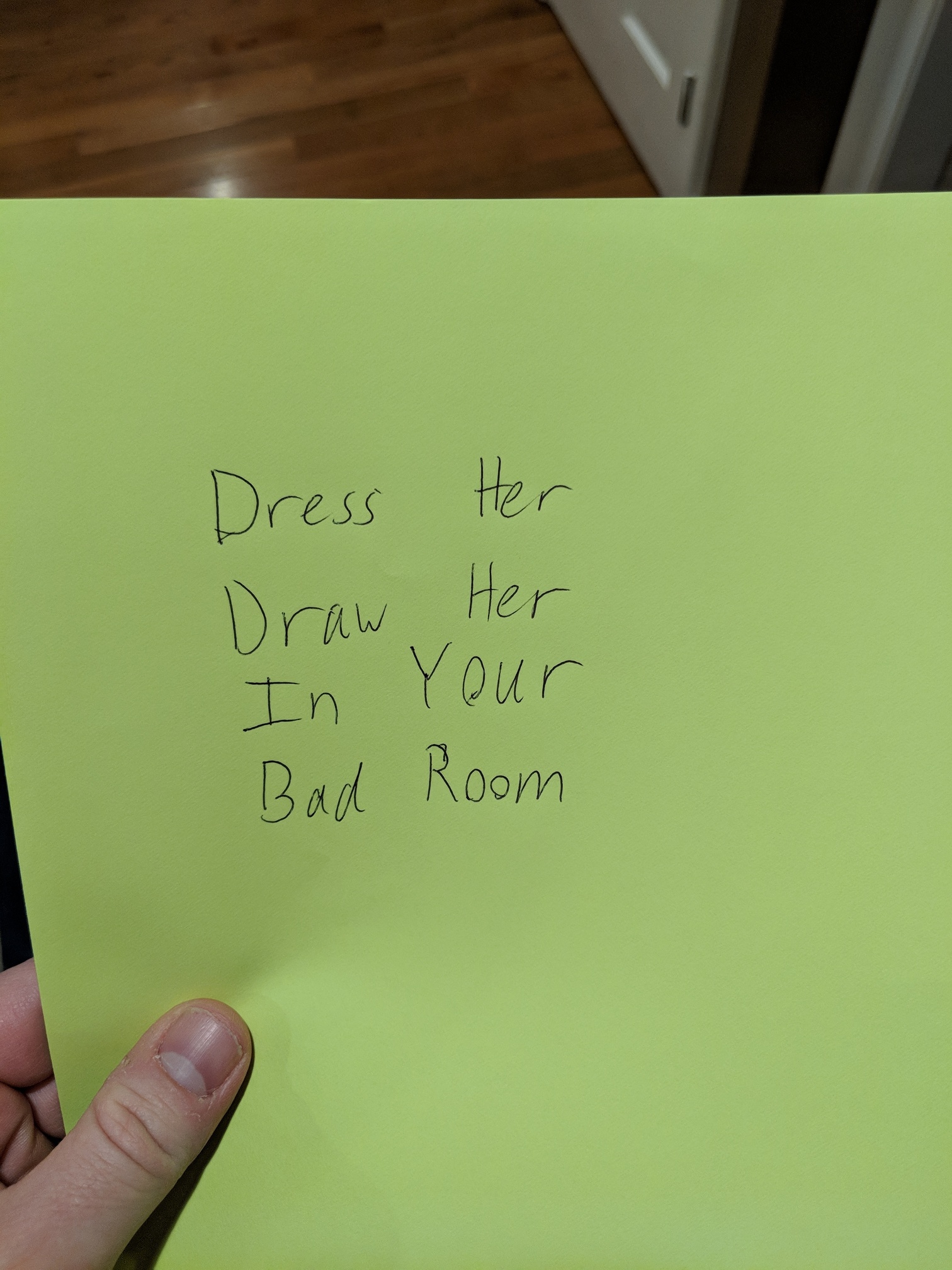
    The third clue didn’t work out well.  My goal was to just tell her “try saying it really fast.”  I was trying to point her to “Dresser drawer in your bedroom.”  She figured out “bedroom” instantly and “dresser” not long after, but didn’t really put it together.  Also, I’m not sure she realized the big fixture in her room is a “dresser.” I need to make sure I confirm her vocabulary before designing these.

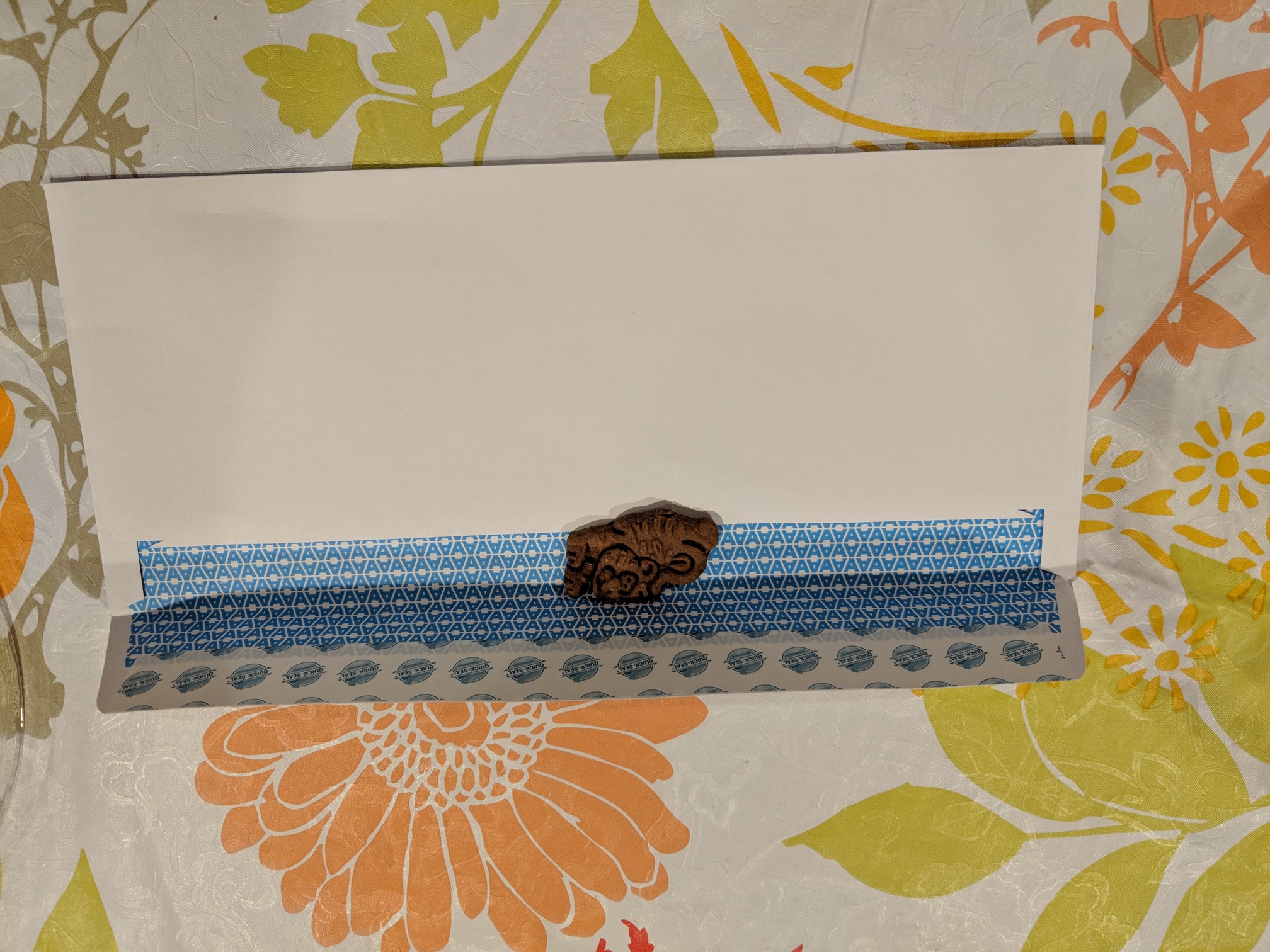
    The fourth envelope just contained a single Trader Joe’s Chocolate Cat Cookie (for people)™.  The goal was to guide her to the pantry. This mostly worked, but we just moved to a new house and it turns out she had no idea where the nonperishable food was stored.  Apparently she thought I was sourcing her Chocolate Cat Cookies (for people)™ from the refrigerator.

    Oops.  We had to guide her straight to the pantry door.

    Clue number five was, I must admit, too obtuse.

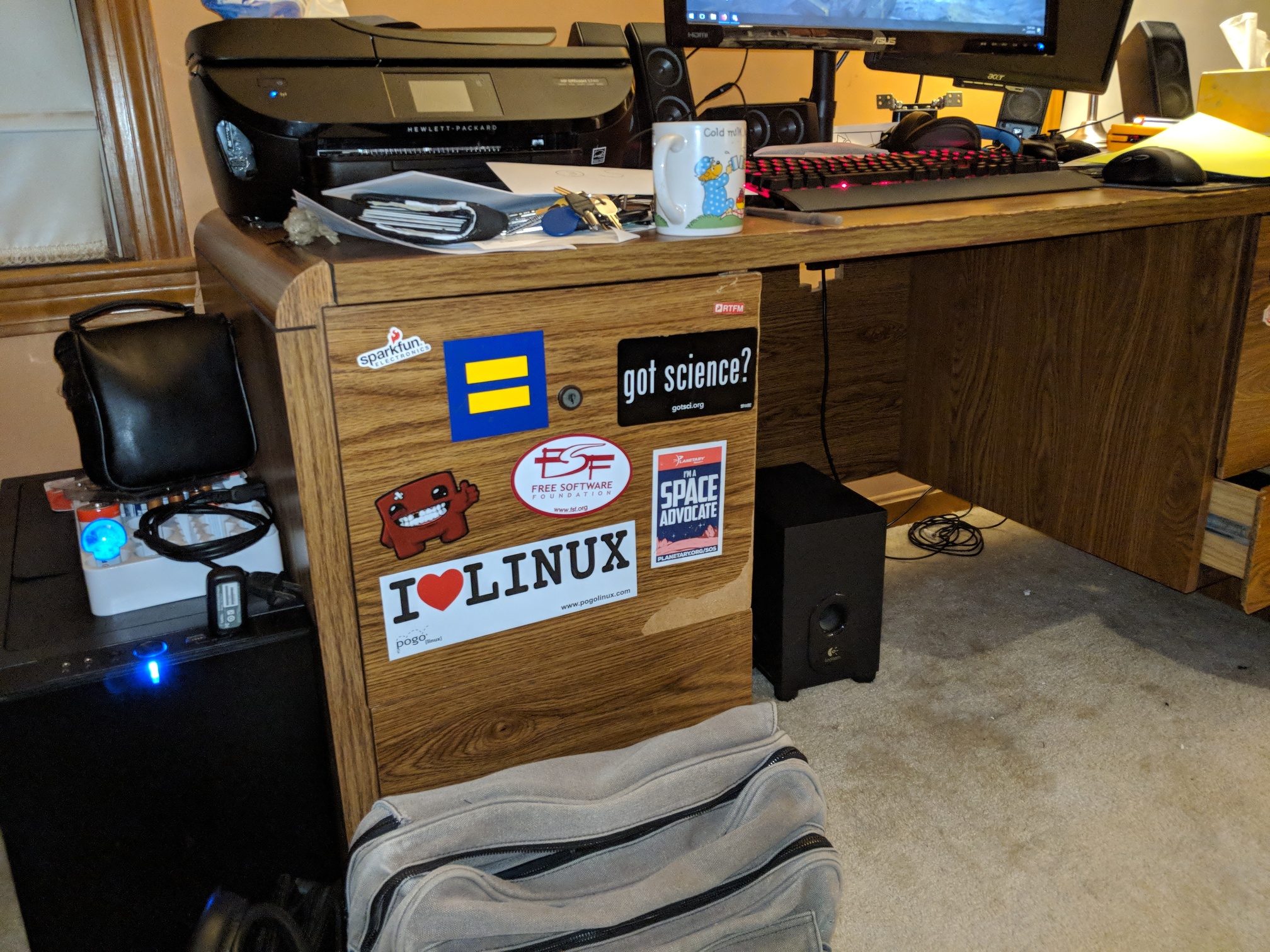
    I had to tell her that LINUX is a kind of computer (shush), which was enough to get her looking in the office.

    See it?

    The goal being to find the matching bumper sticker on my desk. With a little pointing, she figured it out.

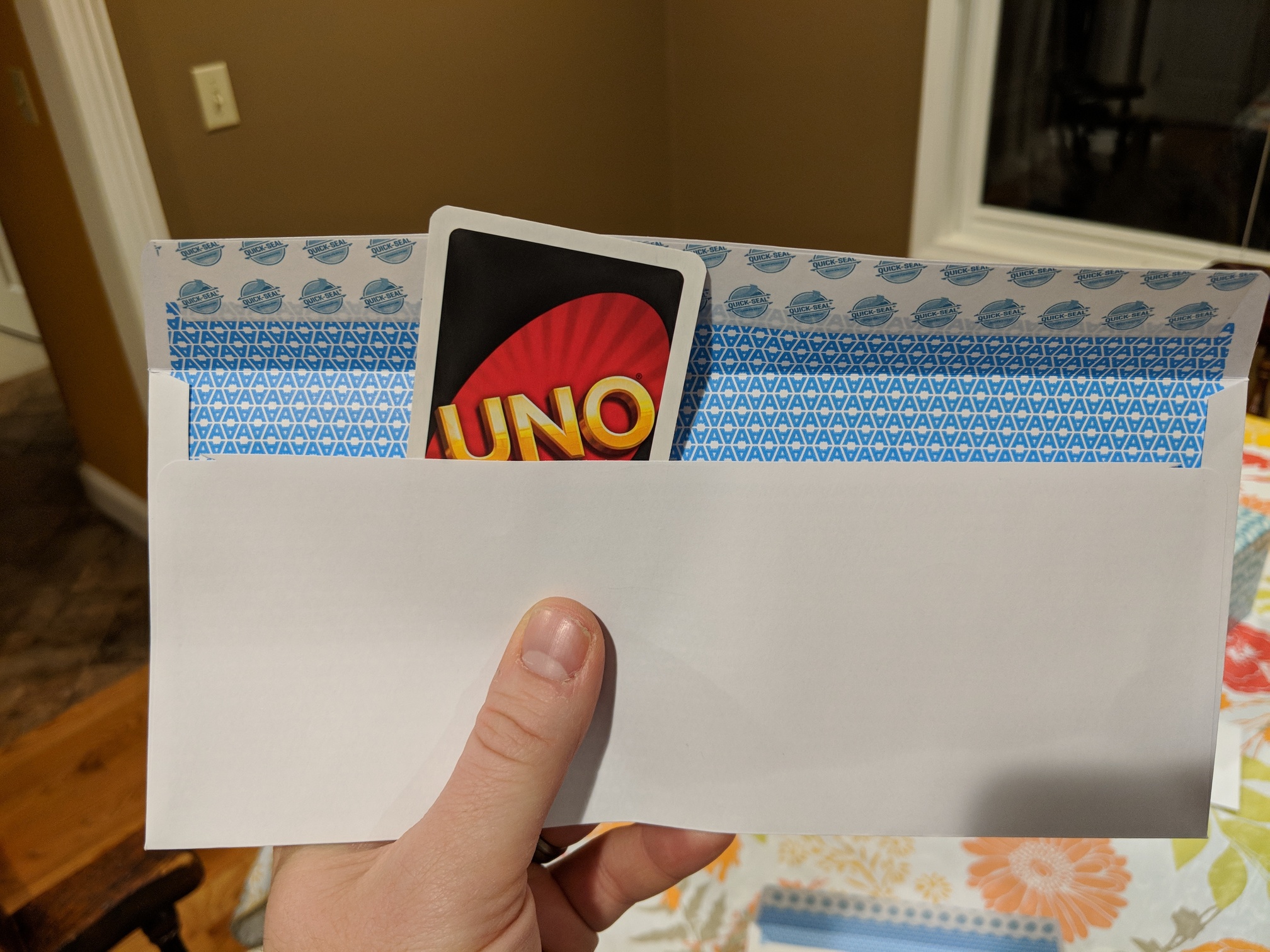
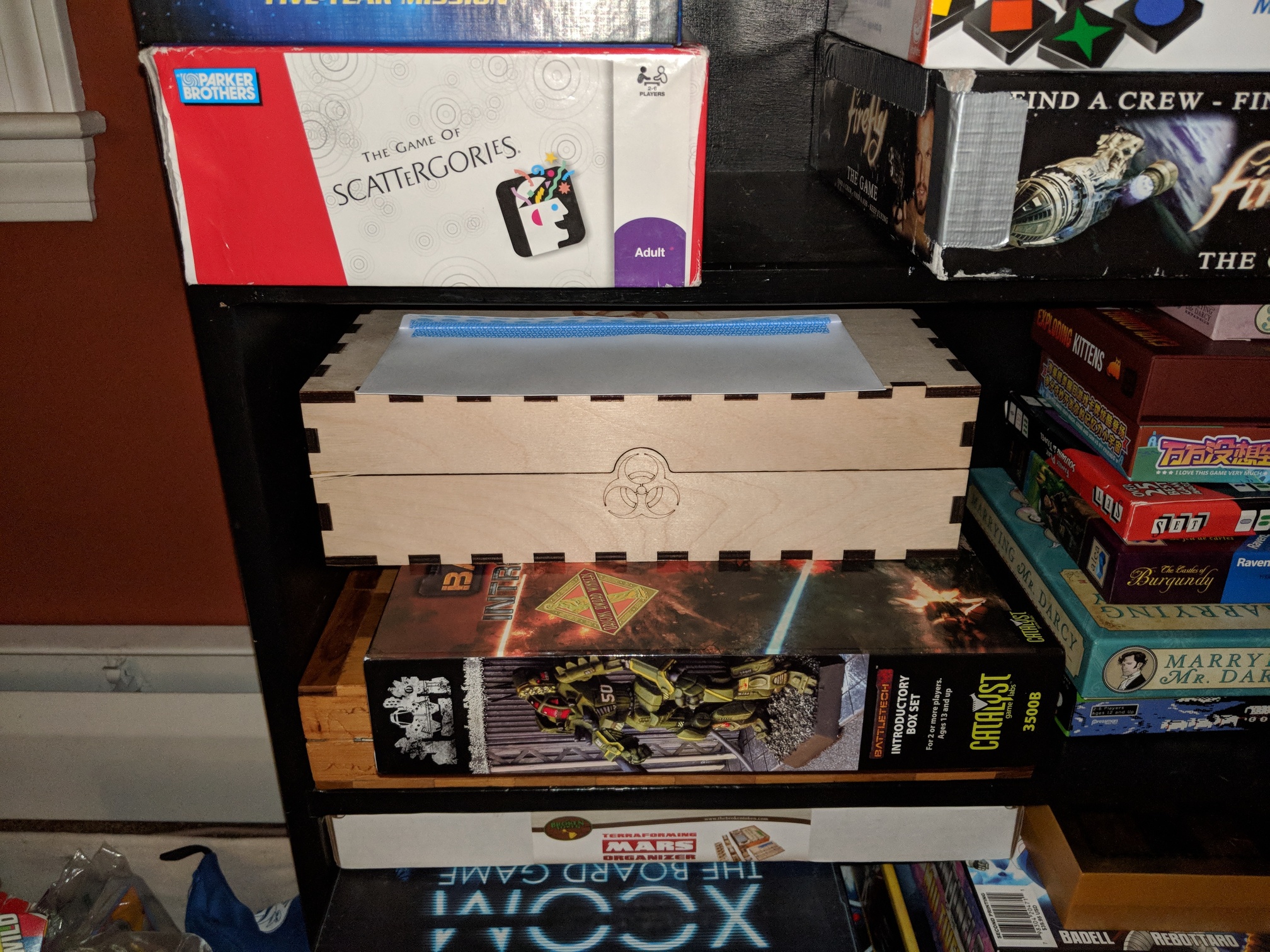
    This clue envelope contained a single Uno card.  She got this right away, it was pointing her to the board games shelf.

    It took, however, a surprising amount of time for her to find the actual envelope.

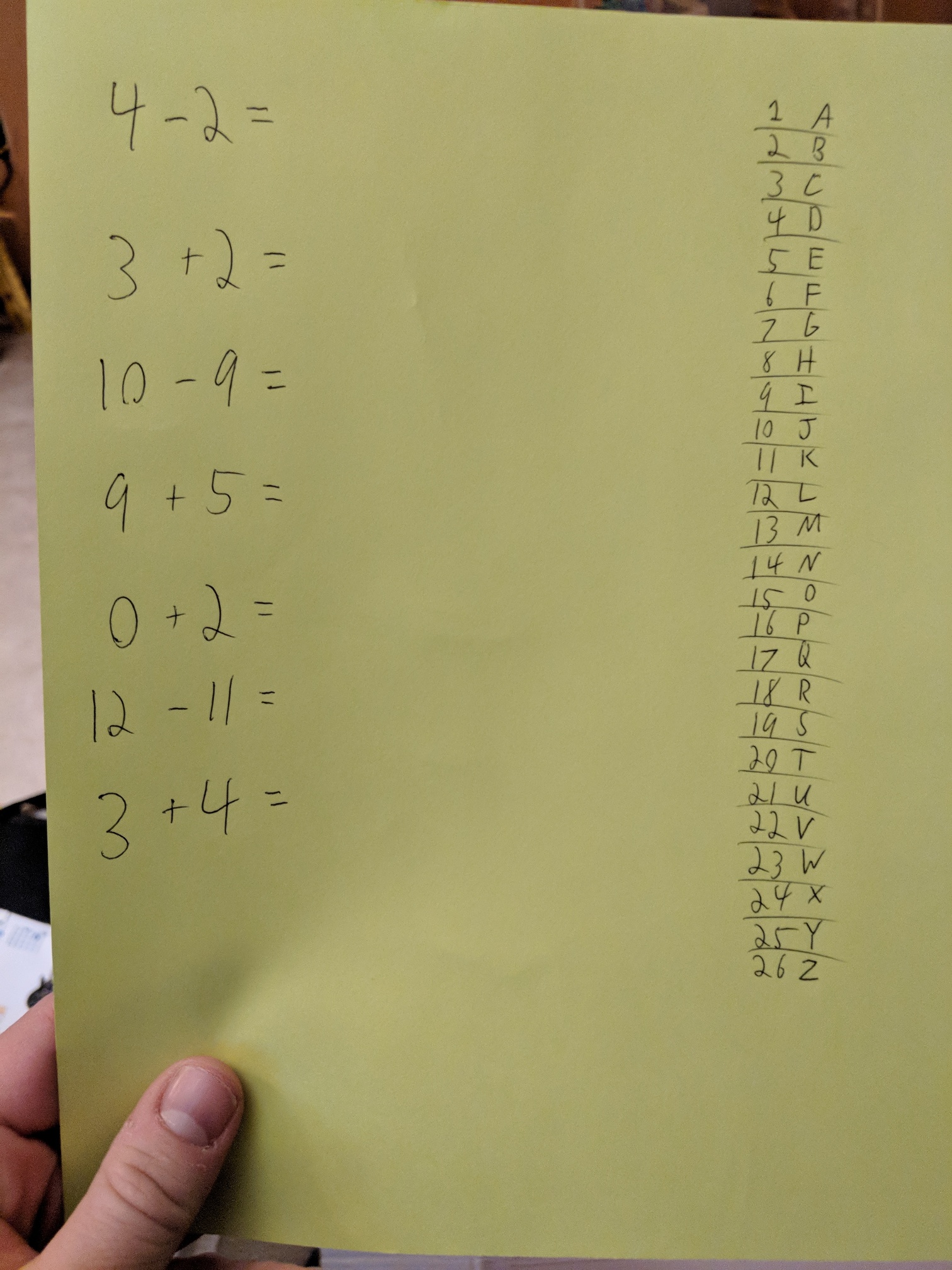
    In general, I’ve been trying to frame these puzzles as a way of emphasizing the extraordinary progress she’s made in school the past couple of years.  The 6th birthday treasure hunt was a lot of pictures, but this one had more actual reading involved. With the penultimate clue, I really leaned into it, because now she can do basic arithmetic!  

    She crushed it.  Decoded, it spells “BEANBAG,” a clear direction to the bean bag chair she sits on in front of the TV.

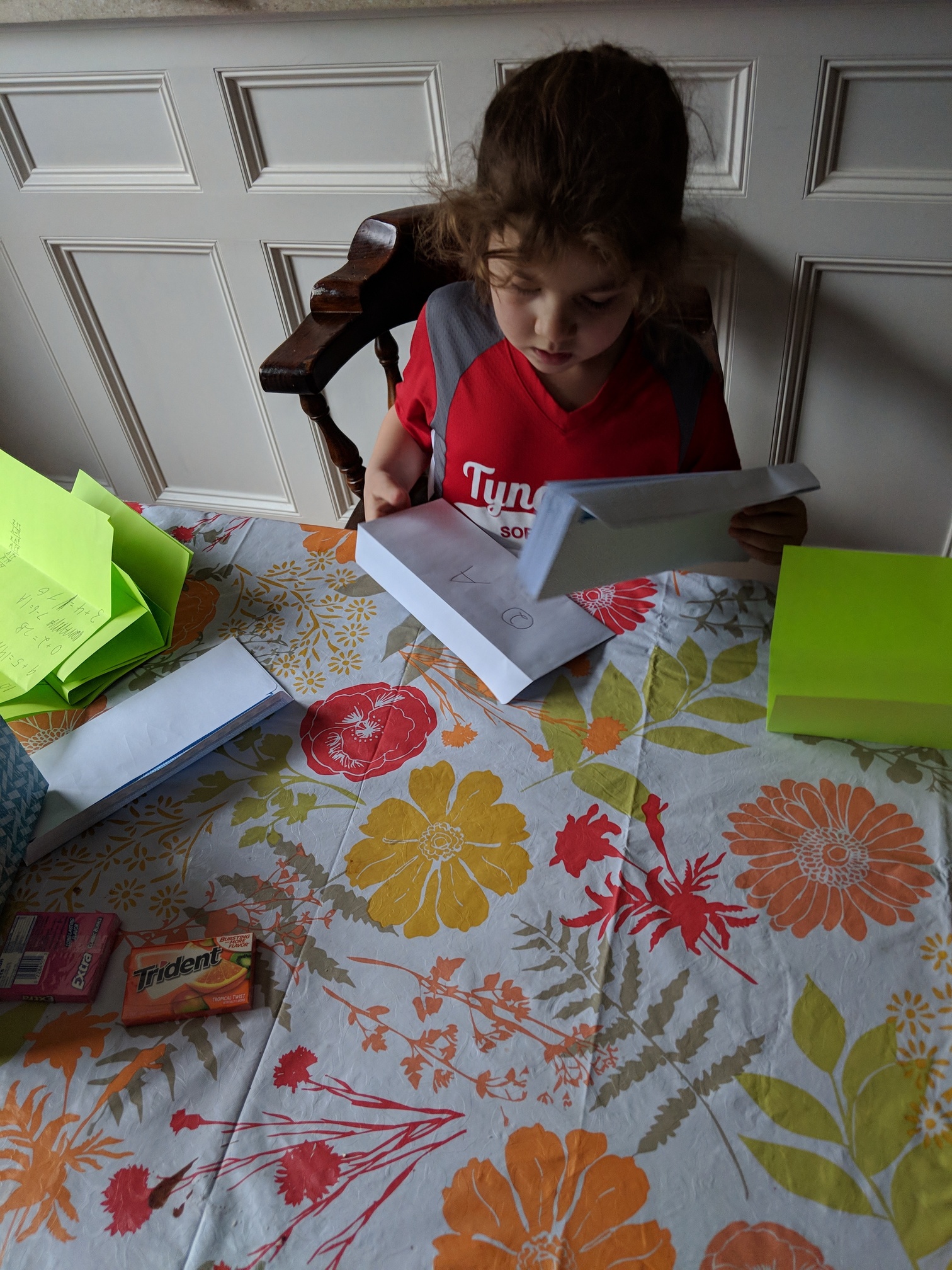
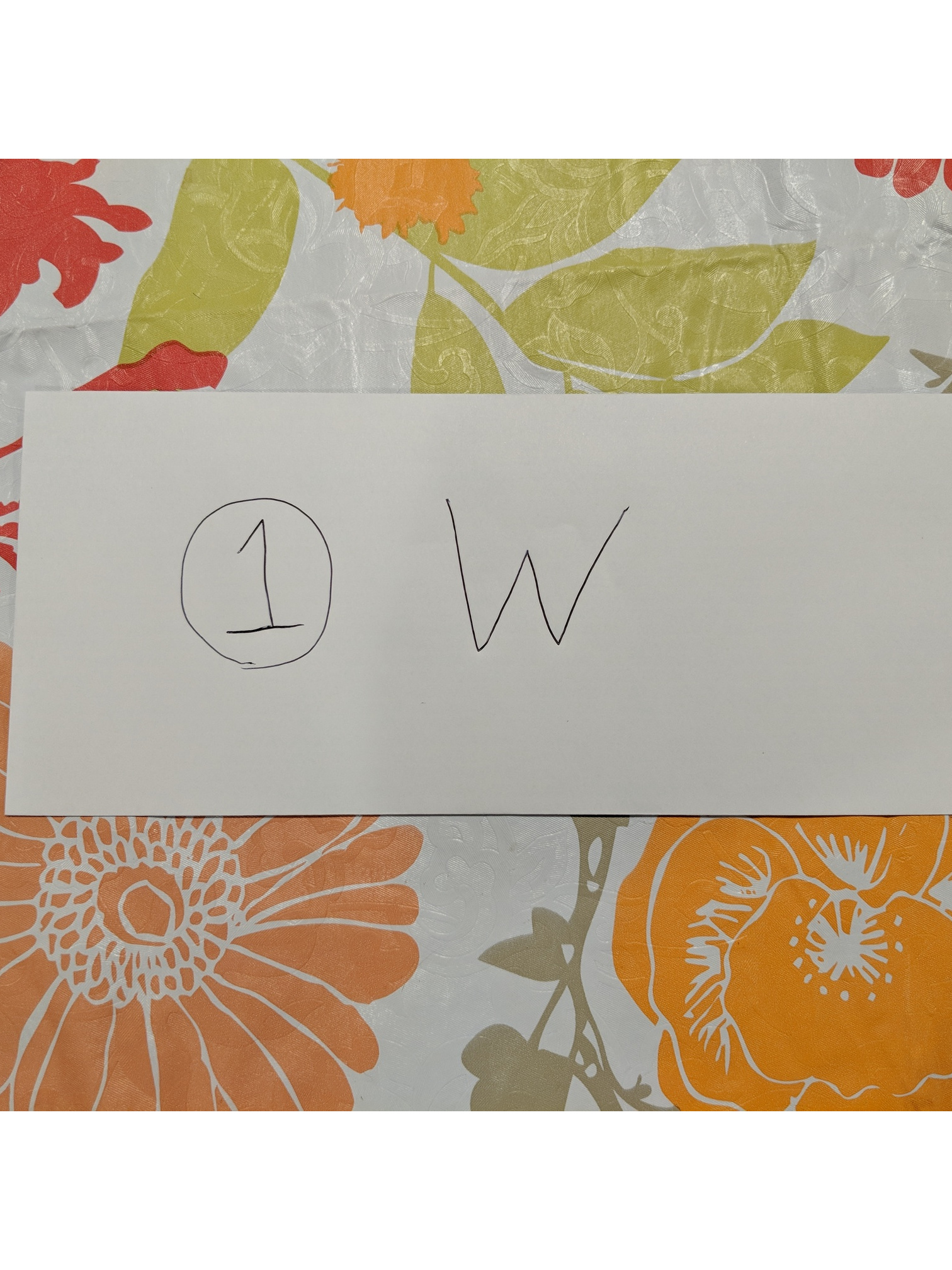
    The final clue was just the numbers 1 through 8, written in circles the same way they appear on the envelopes.  This was a new gimmick: the envelopes as part of the final clue. But, this was too vague. She never had to keep track of the envelopes before, and her first instinct was to discard them.  This goes to a consistent issue she had with the game; she wanted to move fast, but the game was forcing her to slow down.  Perhaps a present is too strong of a motivator. It was actually causing her visible anxiety to stop and re-order the envelopes numerically to get the clue.

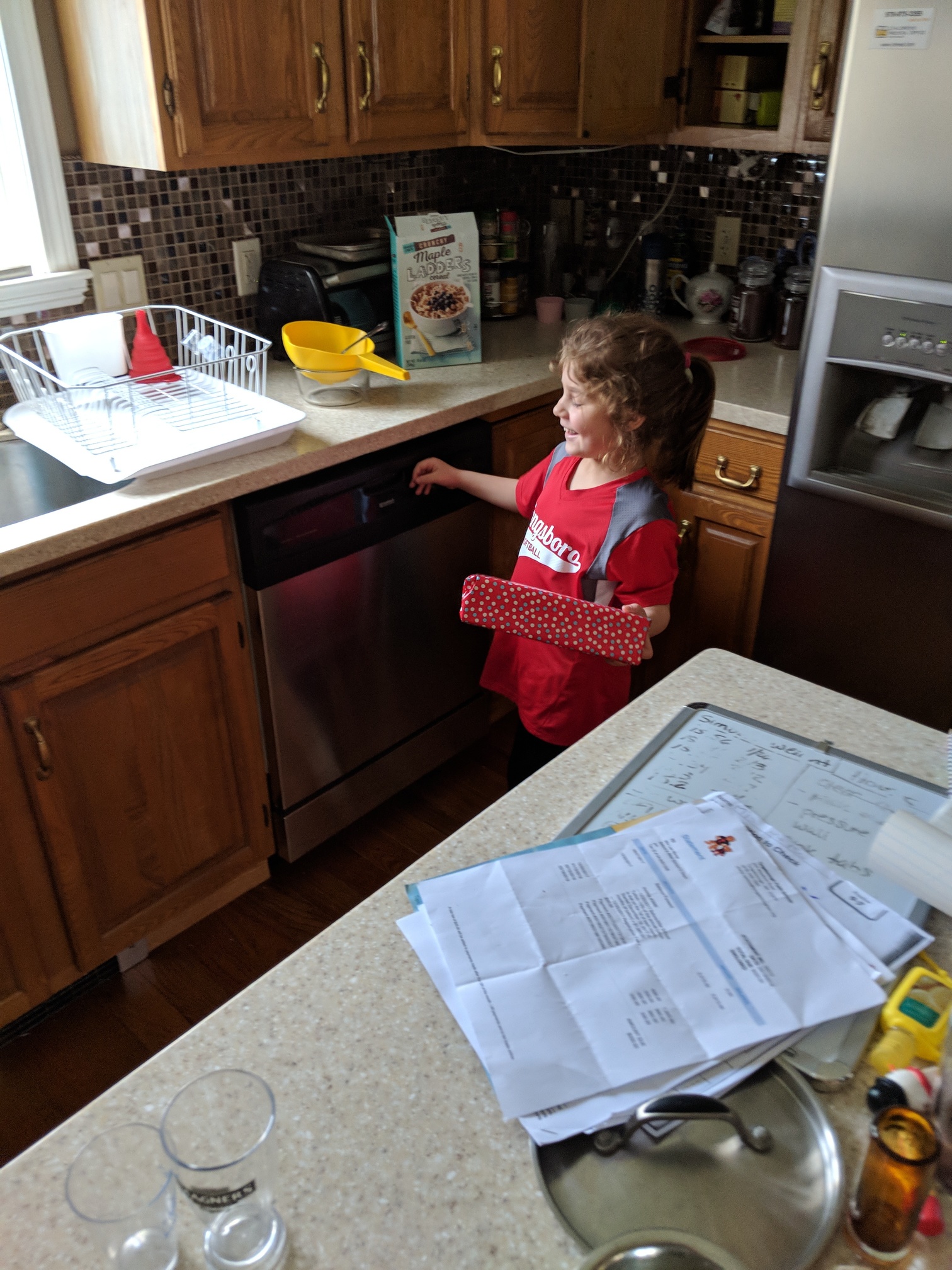
    She did, however.  The letters spell out “WASHDISH,” leading her to the dishwasher for the actual present.  I spelled it that way because I was worried that if I spelled it “DISHWASH,” she’d 1) figure out the letters were spelling a word, 2) find 4 envelopes, 3) realize they spelled DISH, and 4) go straight for the dishwasher and bypass half the game.  This was over-thought; as I mentioned, she didn’t even get past #1. But I still think it was worth it.

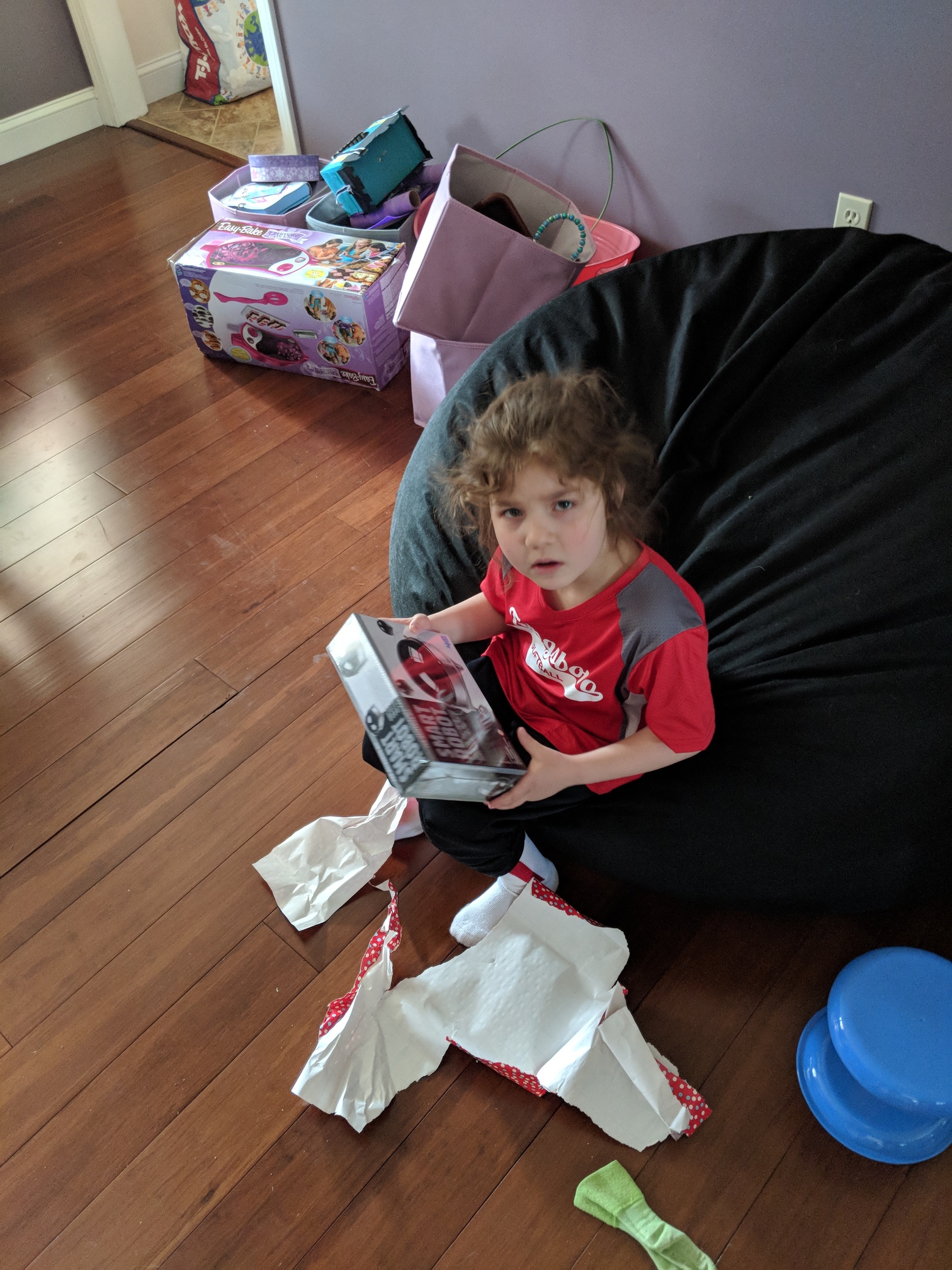
    The ultimate reward for this tireless treasure hunt was: a build-it-yourself robot toy!  Which apparently wasn’t exactly at the top of her wish list.

    “Can I have a different present?”

    Parenthood.  You win some, you lose some.

  • Everything You Think that Matters

    I drew inspiration to write this after listening to two excellent podcasts.  

    On an older episode of Pod Save the People, the hosts discussed a New York Times story detailing racial disparities in how child protective services were being utilized (Skip to 0:10:50).  Embedded in this discussion was the fact that the number of calls to child protective service agencies seems to be increasing in recent years.

    On The Weeds, the co-hosts were analyzing a whitepaper that detailed the potential impacts on shoplifting that can be realized by changing the way welfare benefits are delivered (skip to 0:58:00).  Ezra Klein had to take a moment from an otherwise technical conversation to stop and reflect on a grim implication.  Some of these benefits are for children.  And caregivers are stealing food to feed them.  It reminded me that sometimes it takes effort to make the connections between policy and impact, but those connections were always there, waiting to be found.

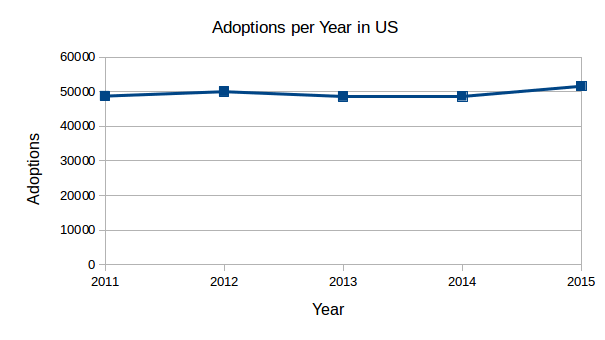
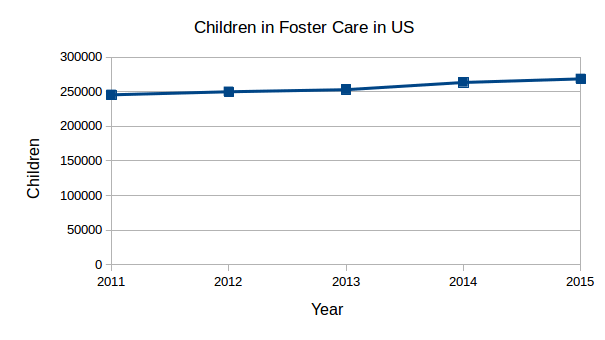
    I decided to try to dig into some data to figure out if there is a current trend in child welfare in terms of foster care and adoption programs.  This let me to the US Department of Health and Human Services website, which allowed me to download source data for 2011-2015 for a few meaningful statistics.  I had to manually sum together state-level info from that site to create these charts, which show nation-wide stats.

    adoptions_per_year
    Nation-wide adoption rates, year over year, have been holding flat.
    Total number of foster children nationwide: WRONG TREND!
    Total number of foster children nationwide: WRONG TREND!

    I’m not going to claim to have invented the idea that issues are complicated, intertwined things.  Everything is connected.  But over this past year I’ve been seeing the issue of child welfare front and center in everything I observe, and it has been startling.

    We’re faced with a crisis in two forms.  We seek to reduce the number of children entering the foster system, and we seek to get those in the system adopted into permanent homes.  This appears to be a problem of related rates, of input versus output.  Certain forces impact the flow of children into the foster system, and other forces impact the rate at which they are pulled into permanency.  These dual challenges have very different root causes and possible solutions.  The numbers show that we’ve got space to do more on both.

    The Supply Side

    Every tragedy, big or small, has a chance to produce a new foster child.  

    For example, take the fact that we’re suffering through a nationwide opioid epidemic.  Think about the staggering numbers of deaths and addiction rates we’re seeing, and ask yourself, what percentage of those are parents?  How many of those households have kids in them, and how many of them are about to attract the attention of child protective services?  I suspect, with a lag, we’re going to see the number of new foster children spike, with the worst impacts being geographically concentrated to areas hit particularly hard by this crisis.  Unfortunately, the HHS data stops at 2015, so I cannot back this up yet.  Let’s just add that to the list titled “Unpleasant Opioid Stats We’re Not Looking Forward to Seeing Next Year.”

    These kids are the tragic amplifiers, impacted by every social and political injustice conceivable.  Every new addiction, every overdose, every eviction, every bankruptcy, every untreated mental illness, every lost job, every prison sentence, every deportation, every catastrophic weather event, every violent crime.  All of them have a feasible path that ends with a child in the system.  

    And then they do find permanency?  They find themselves carrying traumatic loss but living in a world that stigmatizes mental health issues.  This is a difficult burden to take on.  An unfortunately non-zero number of parents will choose to “disrupt” an adoption after a placement, for whatever reason, putting the child back into the foster system.

    There’s a darker side here too, where the threat of separation is weaponized against people of color and those living in poverty.  “Sure, you can call the health department, but I could call child services about the conditions your child is living in.  Your move.”  As an adoptive parent I have a lot of complicated feelings here.  How many of these children did not actually even need to be removed in the first place?

    The Demand Side

    I’m going to speak from personal experience when I say that adopting a child is not easy.  Nor should it be.  But that difficulty thins the pool of prospective adoptive parents.  Massachusetts makes a series of concerted choices to take finances out of the equation.  Our state provides intensive training and post-adoption support services to guide parents through the process.  Adoptive parents can qualify to keep their stipend and continue Medicaid coverage.  And foster children in Massachusetts get free in-state tuition, whether they were adopted or not.  

    These are incentives to encourage and enable adoption, by taking finances out of the parents’ decision-making.  And they are expensive.  States that are not so generous with taxpayer dollars, states like to tout their low tax burden, are not going to have such incentives to offer.

    Stepping back, in terms of state and federal policy priorities, the most obvious knob is straight up funding for child welfare services.  This puts our legislatures in a position to set the priorities of these services in terms of funding.  Underfunded and understaffed departments won’t be able to keep up.  

    Moreover, these kids are going to need services.  They tend to enter the system with physical, psychological and developmental complications far beyond their typical peers.  But education is also a major funding sink for local and state governments.  Public school budgets bear the burden of special education needs, as they carry a mandate to provide services to children who need them.  Private schools are under no obligation to provide such services.  What happens to that budget when we start picking away public school funding for voucher programs?   Public schools will struggle to provide services, and adoptive parents will struggle to make due without.  
    And what about health care services?  These kids can’t get on their parents’ plan because while they are in foster care their legal guardian is the state.  So the state foots their bills; in MA, for example, they get Medicaid.  But Medicaid funding is clearly not immune to politics.  If it suffers, so do they.  Cuts to budgets will impact reimbursement rates, and those rates drive the number of providers offering their services.  If you don’t believe we, as a nation, would ever endanger funding for children’s health care, I’d refer you to the fact that we’re already doing so.

    Too often, when we talk about the welfare state, our conversation focuses on personal responsibility.  On individuals who find themselves dependent on the government because of personal choice.  Dead beats.  Welfare queens.  Well, the real welfare queens are actually princesses, and they didn’t seek this lot.  These children provide the most lucid justification for the social safety net.  The free market?  The invisible hand?  It doesn’t give a shit about them, whether they can eat, see a doctor, go to college, or find a safe forever home.  It’s up to us, the public, to decide how to react to this situation.

    Our policy decisions in this area revolve around creating an incentive for prospective parents to adopt a child by ensuring a certain level of support.  The robustness of these support structures will determine the strength of the incentives generated.  Every policy choice even tangentially related to child care will have an impact on the number of families willing to make this commitment.  

    What Do We Want?

    Let’s take a moment to step away from details and get purely idealistic.  Look back on those two graphs.  The number of children entering foster care should be vanishingly low.  And the number of adoptions should hold at a level to cover the removals that were truly unpreventable.  That’s a close to a perfect world as we can get.

    I’ll acknowledge that our world is far from perfect.  But these ideals should form the foundational principles of what we wish to achieve.  A moral compass that we shouldn’t lose sight of.  Because if we look hard enough, we can find connections to these goals wherever we look.

    Everything you think that matters flows down into this.  Whether it is a crisis driving the swelling ranks of children removed from their homes, a support structure that could have been in place to mitigate it, or a challenge these children face on their path forward, every issue trickles down to them.  These young people, who have had so little agency over their own fates, are depending on us.  Let’s choose carefully.


  • Arcade Cabinet, From Scratch

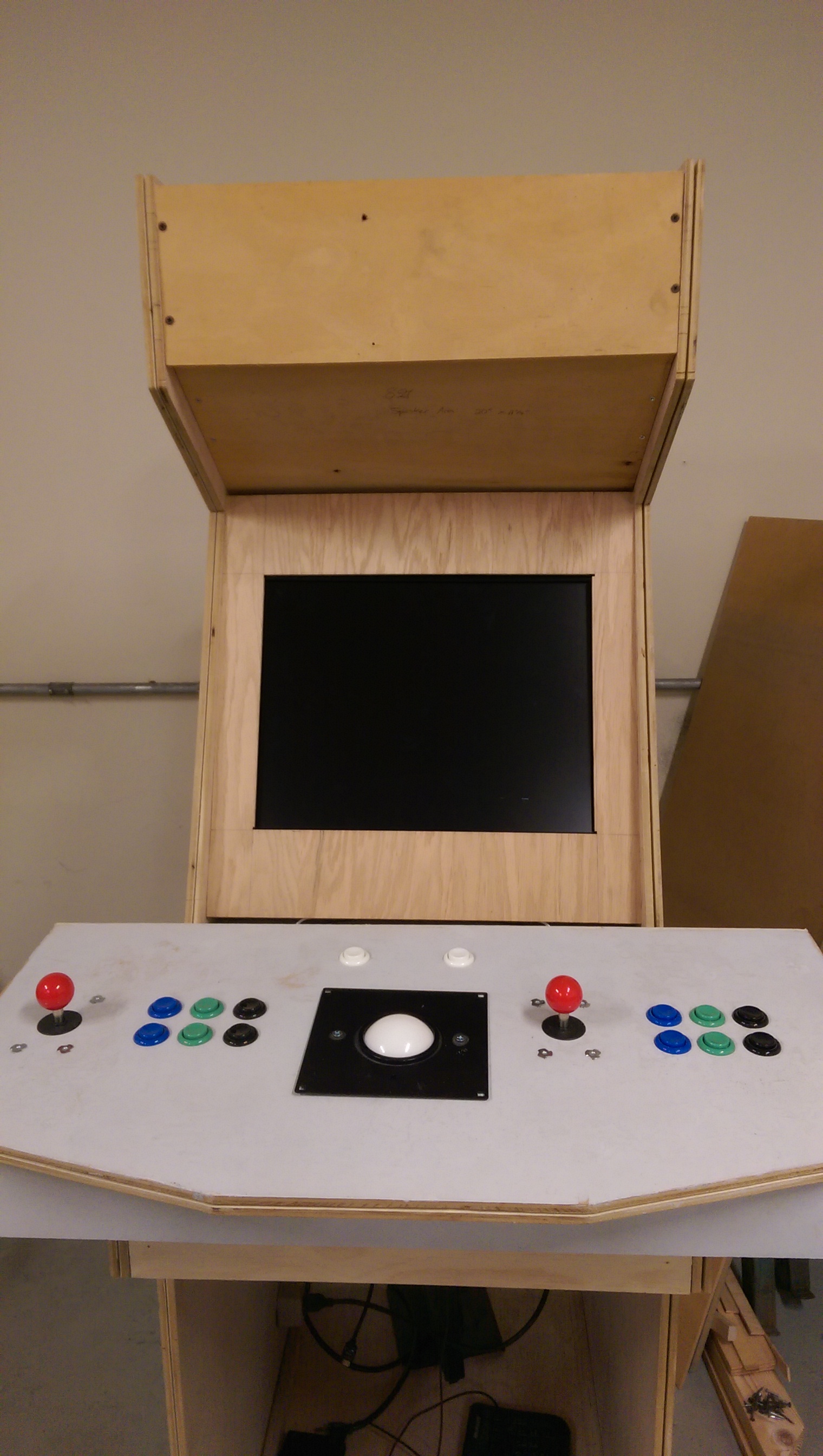
    Remember that post I had earlier detailing the creation of a video game control panel?  And how it was a standalone component of a much larger system?  Well, that system is coming along nicely.

    2017-03-15 21.12.56

    Forward: Those who are interested in a more complete slideshow of pictures can check out this Dropbox album, which contains a full dump of all the photos I took over the three (!) years I’ve been tinkering with this thing.

    As before, I’m going to lead off with accolades.  By no means did I undertake this project alone.

    • Jack Walsh, James Saunders, and Steve Birmingham – How to cut shit on the table saw without murdering myself
    • Bill Taylor – Jigsawing for dummies
    • Samuel Green – Woodworking supplemental and replacement work
    • Jason M’Sadoques – Debugging, build help, general slack picking-up
    • Mike Rushton –  Raspberry Pi expertise

    Last but not least, www.arcadecab.com for the step-by-step instructions.  This site was invaluable.  It broke down the process from sourcing parts to assembly, and I’m not sure how I would have gotten this far without it.  For reference, we used “Cabinet Plans 2.”

    IMAG0104

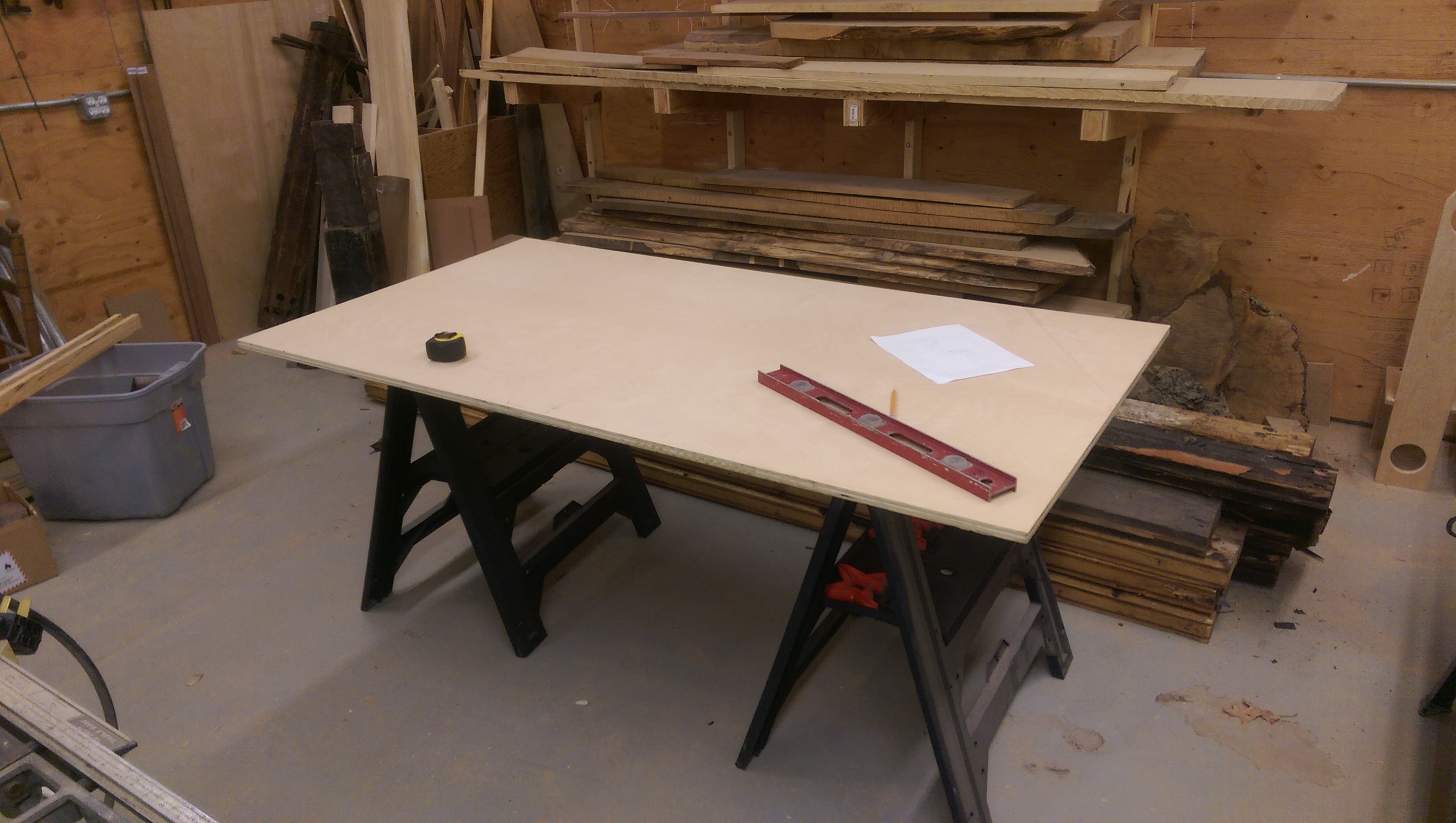
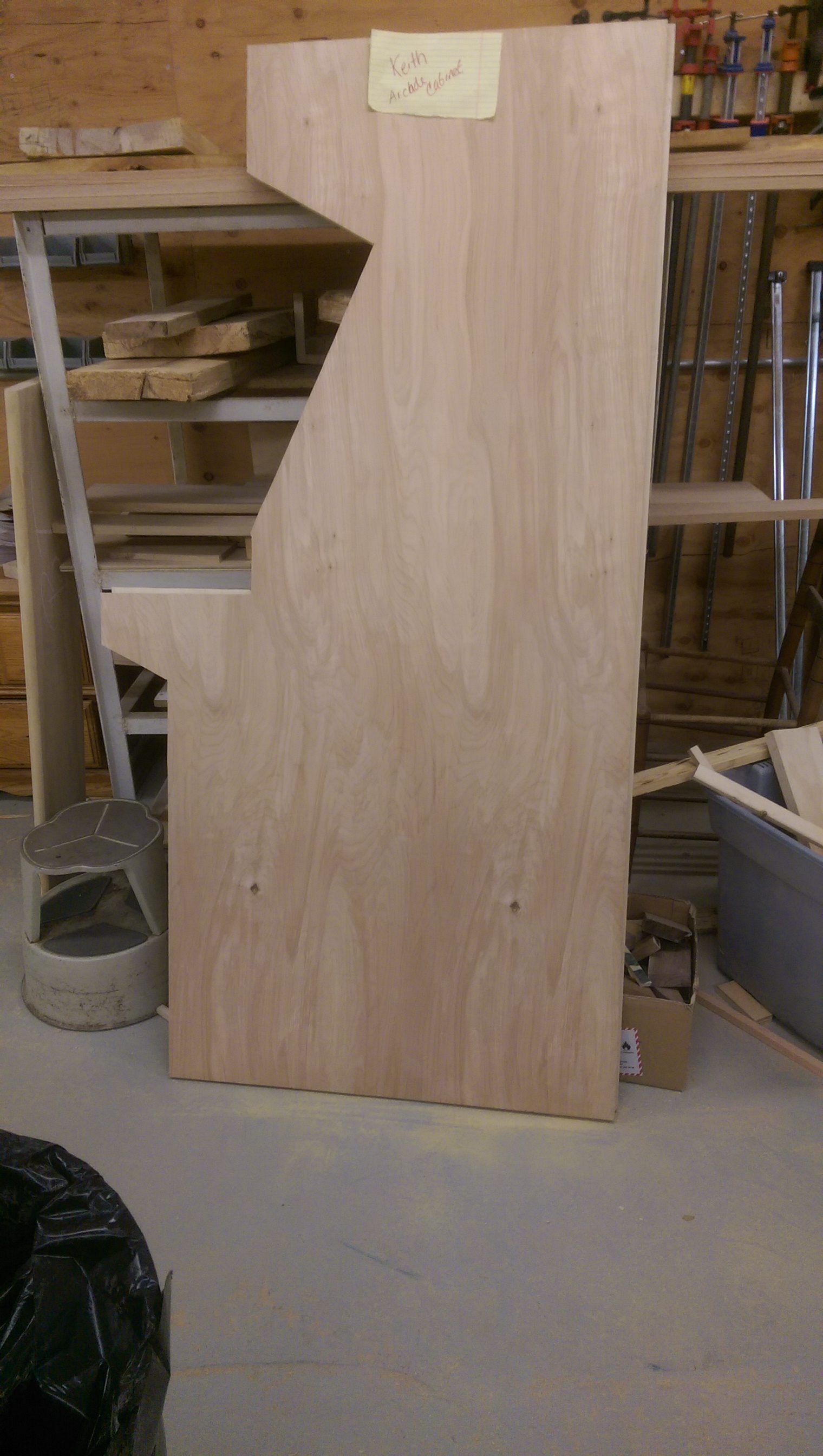
    So, we start with three lovely plywood sheets.  Two of these are used almost entirely for the sides.  I cut out the shapes with a jigsaw and some fences to keep the lines straight.  Despite being one of the very first steps I undertook, I think this is the phase that still gives me the most pride in how it turned out.

    IMAG0129

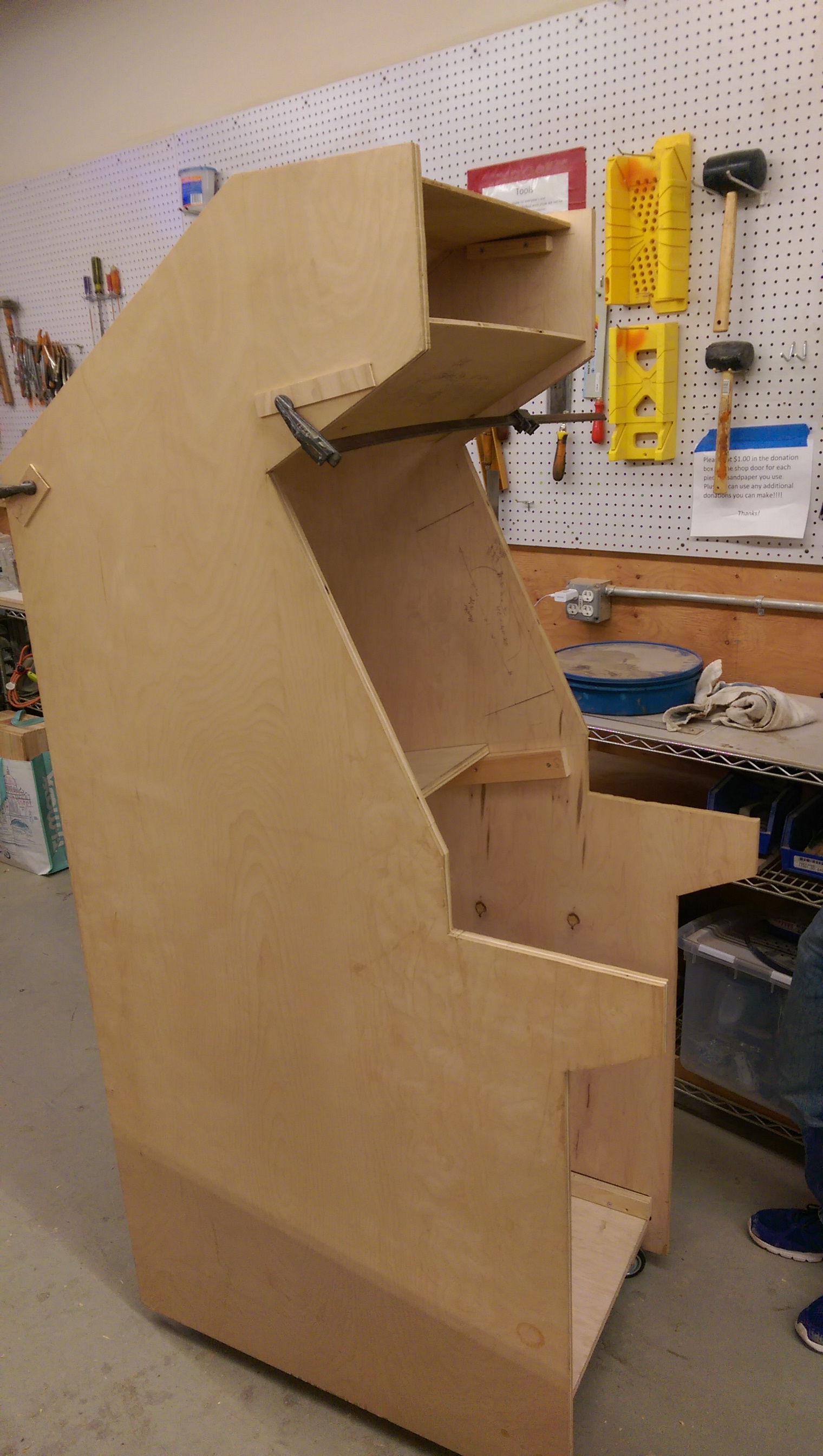
    The remaining plywood gets cut into varying rectangles to form the shelves, top and back panels, and the base.


    The important thing to remember about an arcade cabinet is that with modern technology where it is, the internals are going to be almost entirely empty space.  The form factor is important to create both a shelf for a screen at eye level, and a place to hold a control panel at waist level.  The remainder of the panels enclose the unit, and from these it’s all just a game of aesthetics.

    2017-02-14 21.42.45

    Getting the base in seemed easy, since there’s a slot for it.  But I’ll be damned if Sam and I could figure out a graceful way to fit a screwdriver (let alone a power drill) in at a usable angle to attach the base to the ledger boards on the side.  And this played out most of the pieces, the angles were just awful.  From what I can gather, this plan from arcadecab.com was meant to show as little external hardware as possible.  As a beginner in woodworking, I probably shouldn’t have considered this important, and found a different way to attach these things.  But it’s done, mostly with significant amounts of elbow grease and Hail Mary pre-drilling.

    The base sits on casters to make the thing easier to move.  Seems like this would be optional, but during the construction phase it was rolling in and out of its various temporary homes constantly.  Being able to do so was a major energy-saver.

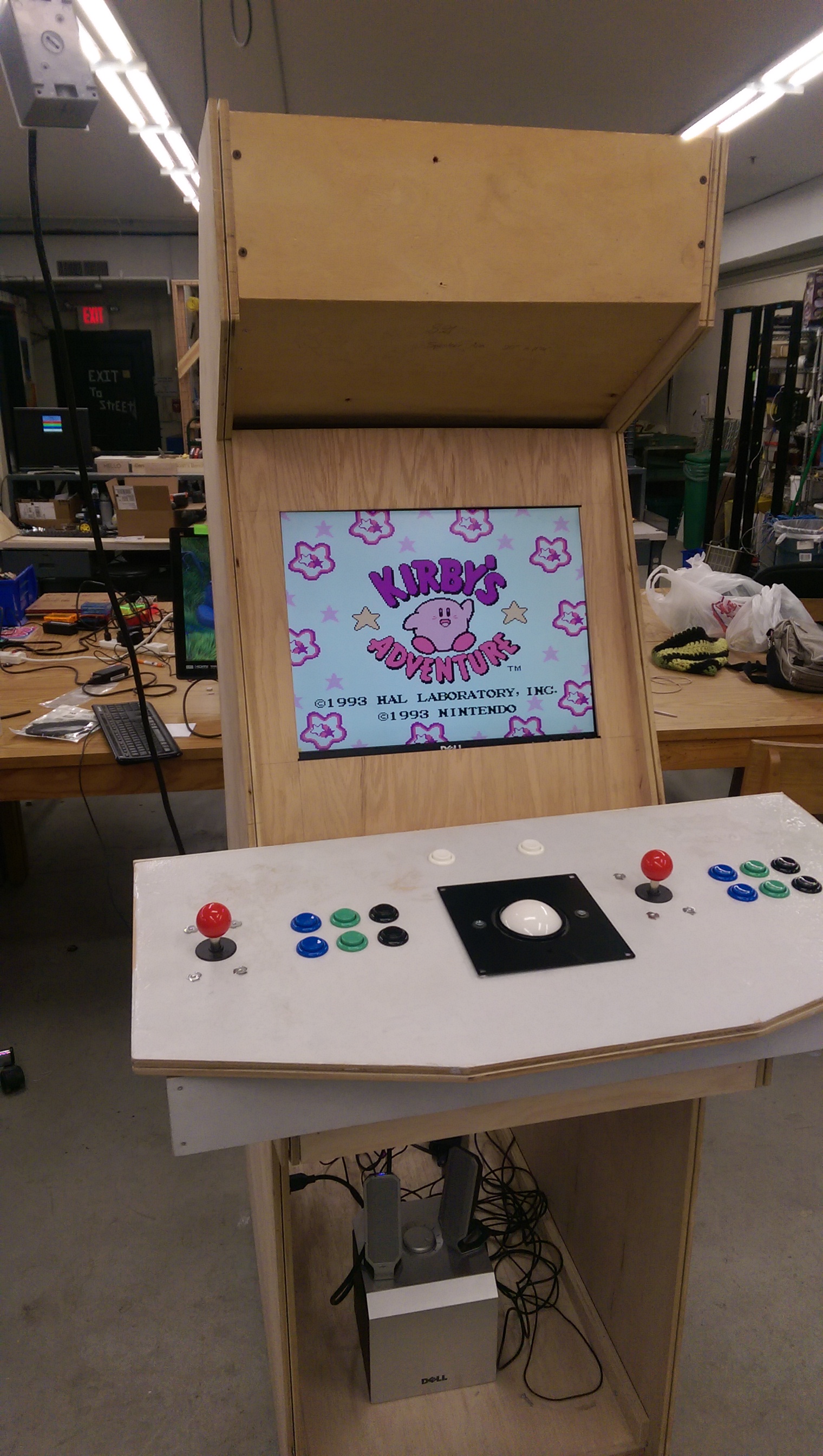
    Choosing a screen turned out to be a source of great consternation for the group.  A CRT TV would provide the proper aesthetic, but comes with a much higher weight and takes up much more space.  The bigger issue, however, was actually getting the maximal size.  Pythagoras informed me that based on the widths I had cut, we could fit a 25” television, but that turns out to be hard to come by.  In the end, we compromised with a 19” LCD monitor with a wooden bezel for the time being.  With the half-back construction and removable panels, retrofitting a CRT is still possible down the line.

    2017-03-17 21.13.45

    The control panel itself is pretty much stand-alone, and simply outputs a USB cable.  After all of the pieces were assembled, the challenges moved quickly from woodworking to software.  We are currently using a Raspberry Pi Model 3 running the “Recalbox” image, a Debian-based distribution pre-configured with frontend and backend utilities to emulate a variety of gaming systems.  The control panel mimics a keyboard, so configuration was fairly straightforward once the buttons were properly wired up.

    A set donated speakers (thanks Mike!) provide audio, and simply plug into the 3.5mm output jack on the Pi.  I plan on adding some grills here to improve the overall aesthetic.

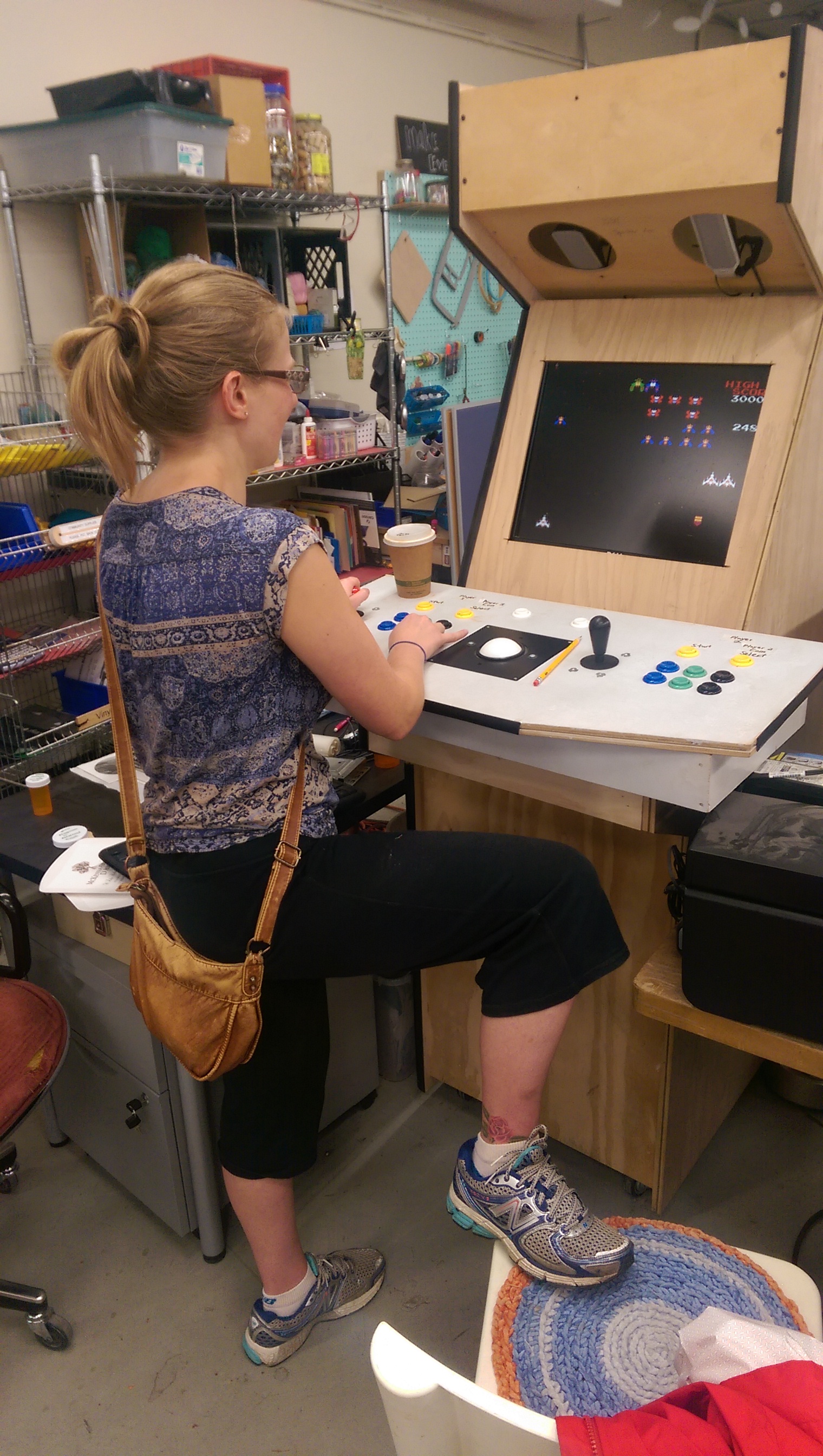
    Stephanie is better than you are at both Galaga and the Riker Maneuver.
    Stephanie is better than you are at both Galaga and the Riker Maneuver.

    There’s still much to do, especially in the way of decoration.  Plus, Recalbox likes to crash a lot at the moment, so additional debugging will be necessary.  But this is an accomplishment I think we can be proud of.  I certainly am.


  • A Sense of Power

    This is bullshit.

    Seriously?!
    Seriously?!

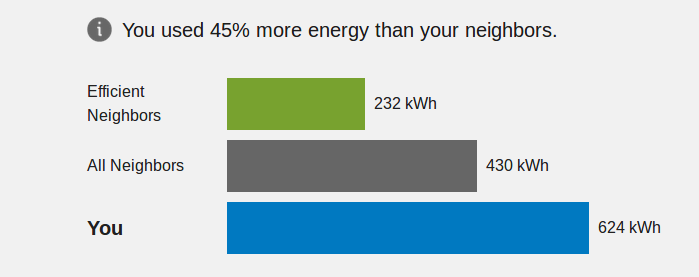
    If your electricity provider is anything like mine, you’re getting notices like these too. Back when it was just Stephanie and I, we tended to sit squarely between the green and blue bars. Not anymore. Now we’re the long bar. I’m surprised with how much the gamification aspect of my power bill bothers me.

    Let’s set aside the fact that I’m fairly sure my “efficient neighbors” either have solar panels or are just vacant houses. We should be doing better. We use cold water for most laundry, air dry it, have LED bulbs everywhere, the works. Even with two kids, you’d think the picture wouldn’t be so stark.

    So, I want to know where this energy is really going. But I don’t want to drop hundreds of dollars for a “smart meter” or “smart breakers” to give me this information. Fortunately, there’s another cheaper, maker-project-savvy way.

    Exposition time!

    So, a long time ago, the power company decided it was dumb to send people walking up to everybody’s power meters to read them. So they put radio transmitters in the meters that blast out your consumption information into the aether.

    So now the meter reader guy/gal just has to drive by with an antenna and slurp up the readings. Great for them, and convenient for us. It provides us with a means of reading our power meters with a computer.

    What I Used

    • A computer that’s on all day. I just so happen to have one, serving up this web page among other things.
    • A USB radio antenna based on the RTL2832U chip. According to Amazon, the one I used is no longer sold, but this should work just as well I guess?
    • This software  This is a lovely little github project that provides a means of controlling the above antenna via Software-Defined Radio to listen at the specific frequency used by power meters. I can’t understate how important this was.
    • A script to run rtl-amr and process the information. I used Perl, GnuPlot, and LibreOffice Calc when I couldn’t figure out how to make GnuPlot do what I wanted.

    I thought that setting up software-defined radio was going to be the hard part. But I was wrong. The rtlamr sources were easy to build, the dependencies well-defined, and the executables pretty much handled all the nitty-gritty details of setting up the antenna. Once I isolated my meter from all the ones in range, it was all just a matter of collecting data. If you’re curious, ask me and I can explain the process in more detail.

    Results

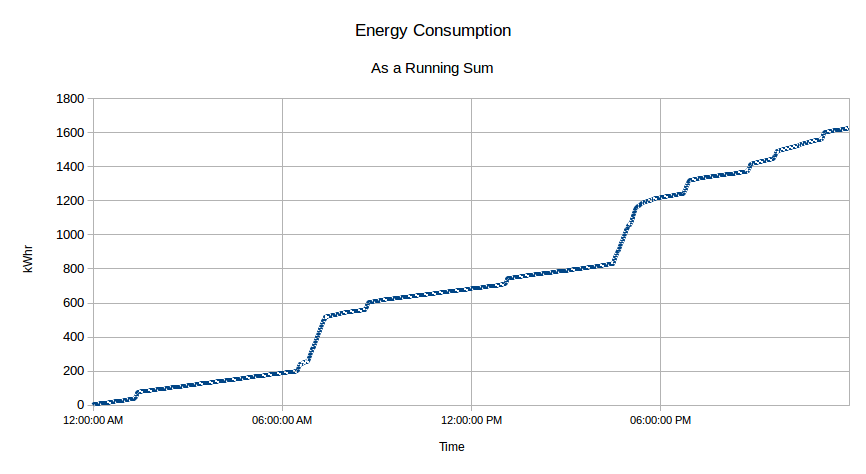
    I installed the module and set up a cron job to run a single-shot sample every minute for a full day. I got this lovely graph from an average Wednesday in May.

    sigma_graph_20170517

    The first thing that jumps out is that most of the big consumption periods are when all four of us are awake and in the house. I’m sure this seems obvious. But I was half afraid I’d see that my computer and the TV were chewing up tons of juice after the kids went to bed, and we’d be reduced to playing board games by candlelight to save power. It actually looks like that the post-bedtime power usage is about twice what it is in the wee hours of the morning, judging by the general slop of the line. Not bad.

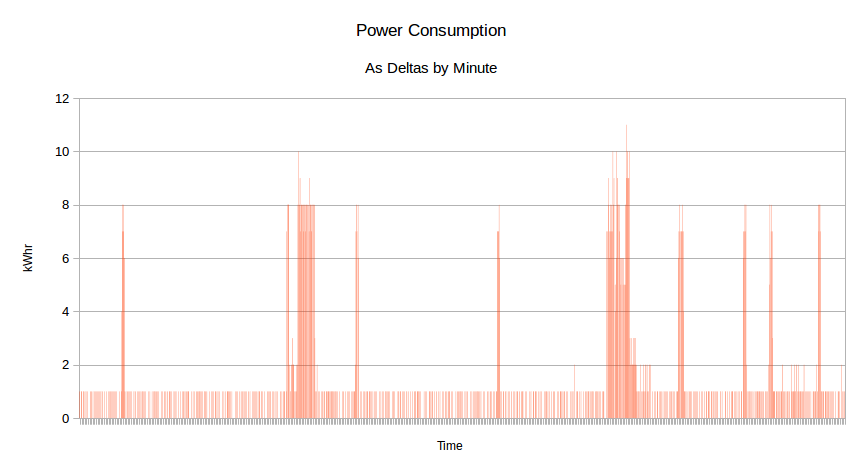
    Now, let’s present the data differently. Instead of a running sum, let’s subtract each sample from the previous one to get the difference between the readings every minute.

    delta_graph_20170517

    Most of the entries in this data set are 1 or 0. We just don’t have the resolution to see fractional deltas. But check out those spikes in the middle of otherwise idle time! Those spikes, I’ve figured out, are caused by our furnace turning on every few hours to keep the forced hot water at a baseline temperature, even though it was very warm this particular day. So, there’s one lesson: turn off the furnace when it’s warm enough to not need heating.

    There’s a fun data analysis lesson here.  Without looking at the deltas graphed out like that, I doubt I would have noticed how sudden those jumps were (you can see them in the previous graph, but they just look like slightly steeper slopes).

    Well, Now What?

    So, where do I go from here? Unfortunately, this is the most resolution I can get out of this system: showing me how quickly I’m consuming power, house-wide, at any given time. There’s a real limit on what I can do with this information. But it makes a nice start, and I’m pleased with how easy software-defined radio turned out to be.

    Well, if I manage to utilize this new tool to produce some sort of epiphany, you know where I’ll post it.

  • PAX East 2017 Postmortem

    One of my resolutions this year was to post more. Well, you can tell by the date stamps on my last few updates that this has not been a goal well met by the end of 2017’s opening quarter. I could say the life of a parent is too hard, it’d be more apropos to say that lounging after a hard day is too easy.

    But you know what happened this year? The same damn thing that happens every year (except maybe not next year, but I’m getting ahead of myself). PAX East happened. And I always post about PAX. So what better way to hop back into the WordPress saddle then a PAX East wrapup post. But for the sake of brevity, I’m going to hold off on the general round-up, and focus on a single takeaway: I probably won’t be going to PAX East 2018.

    Nitpicks

    They didn’t seem to even bother with the swag bags this year. Literally nothing in there but fliers. I don’t feel like I’m entitled to free stuff, but at this point why even bother having them? Just hand out the guides at the entrance and save some plastic.

    The no-alcohol policy remains in effect. And when it’s perilously cold outside, the prospect of bar hopping is awfully unappealing. So these were some sober evenings.

    Catalyst Game Labs, current stewards of the BattleTech license, apparently skipped the convention. They appear to be as committed to not making money on this excellent and under-appreciated franchise as ever.

    Panels this year seemed stuffed with marketing teams instead of community members, and were not as interesting. Traditional staples like OC Remix were absent. Extra Credits was still awesome. But they can’t carry hard enough.

    Free Play was Broken

    The Tabletop area is always popular, busy, and crowded. This year, it was smaller. But still just as popular. Math tells us this is a bad combination. It meant that it was impossible to get a table in the Tabletop Free Play area until very late.

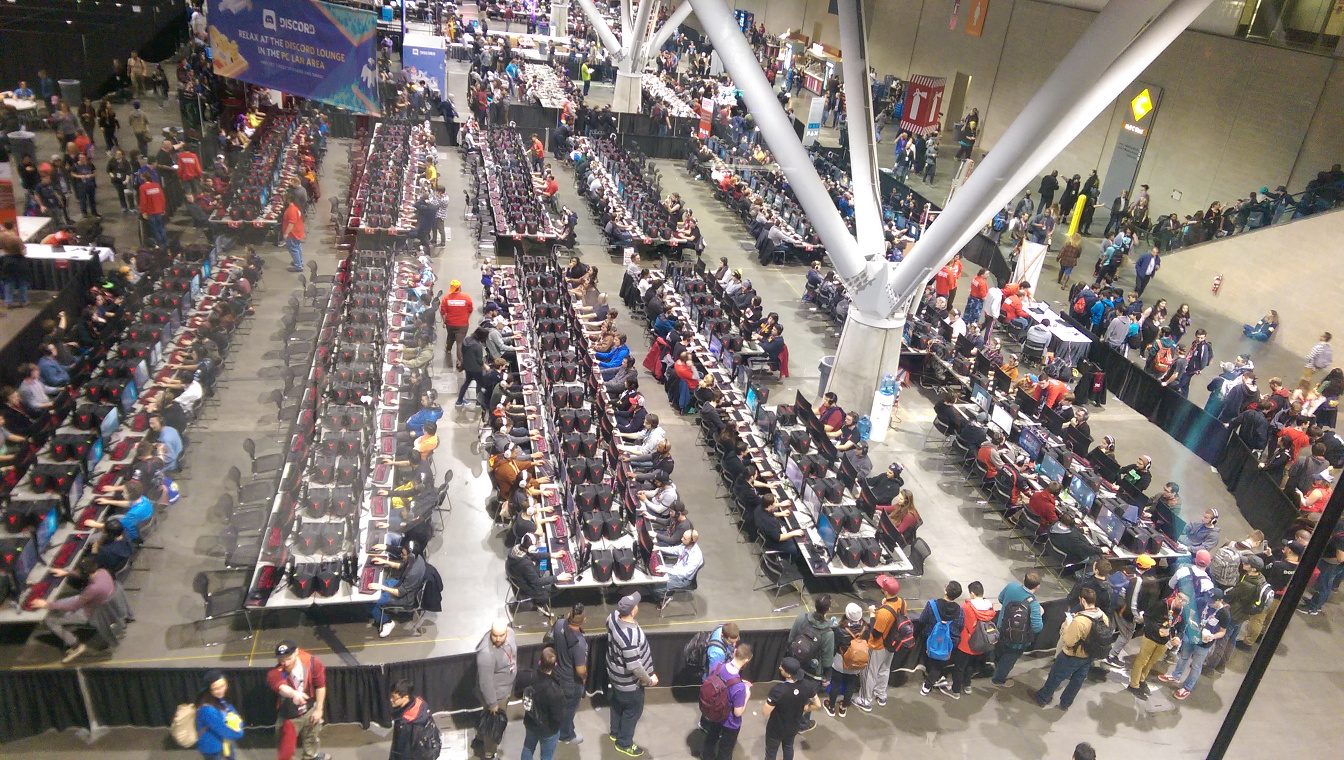
    Moving on to PC gaming, I think this picture sums up the problem with the PC Free Play area.

    pax2017_pc_freeplay

    I count 30 open seats, and a giant wrap-around 45 minute line. Are those reserved for tournaments? No, there’s a separate PC Tourney area. Are they just…broken? Or are they just having trouble getting butts into seats? These are both preventable problems. We didn’t bother stopping by this area this time around.

    And the Classic Arcade Free Play area? Gone. Wasn’t there this year. So that’s three free-play areas that were inaccessible. If I can’t play games…why am I at a gaming convention?

    Chills and Checks

    So it was a little cold. As in, if you stayed outside for more than a few minutes, your joints would seize up where you stand, and your frozen corpse would thaw out some time in July. I know PAX can’t control the weather, and it was bad luck that this convention fell on the coldest weekend of the year. But this is an avoidable problem. If you’re holding a convention in Boston, maybe don’t pick early March. Several problems stemmed from this poor date choice and unfortunate temperature.

    James and I arrived 45 minutes after doors opened and still got stuck waiting for over half an hour in said line, outside, while it was snowing. I can’t imagine how anybody in a costume with exposed skin was feeling. That’s messed up.

    And by the time we got in, every coat check was full. So now we’re lugging around winter coats all day, too.

    Oh, and we missed events we wanted to attend in the morning, because of the aforementioned bag check line. How the hell can you get to a 10:00AM panel when the doors don’t even open until 10:00AM? That’s physically impossible, even without the massive line.

    Break Time

    Everything I’ve listed up at the top of the post represented annoyances or disappointments. But this bag check policy is the real sticking point. It serves no purpose. It makes getting into the convention a royal pain in the ass. It renders the hours of the convention inaccessible. And in inclement weather, it’s actually dangerous to attendees.
    If the security policy doesn’t change, I’m not going next year. I could use a break, anyway. At this point in my life, the opportunity cost of losing a weekend is takes a lot to justify. PAX is no longer clearing that bar.

  • The Frustration Quadrant

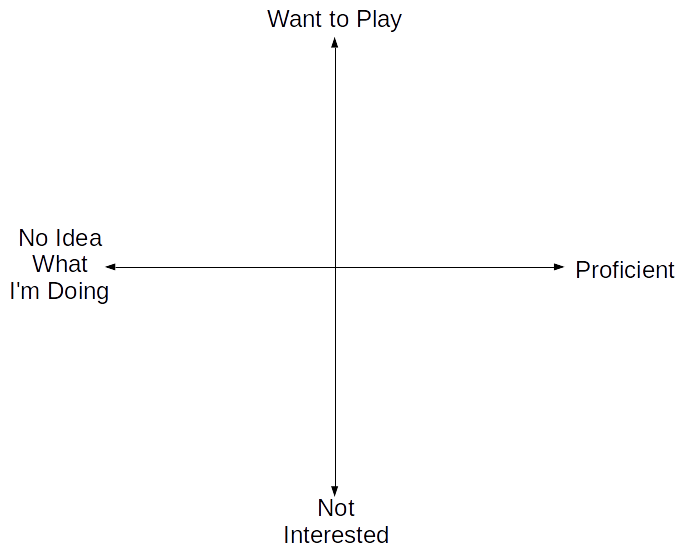
    I think I found a way to summarize how frustrated I feel at times when it comes to board games. A visual method. Excitements! To LibreOffice!

    quadrants_1

    So, two axes. Vertical axis is a gauge of interest. Horizontal axis is experience level. Not skill level, per se. This isn’t a measure of talent. Just understanding of the fundamentals.

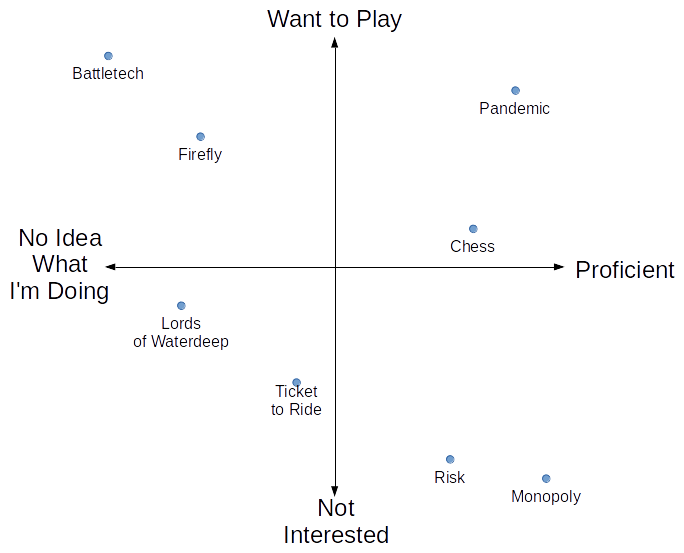
    I did an example scattering of a few games I play, and one (Waterdeep) that I haven’t.

    quadrants_2

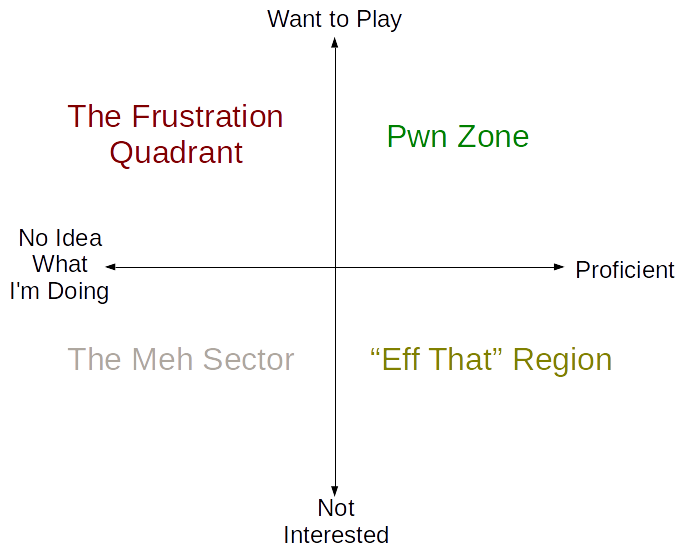
    Those that know me probably see the pattern or understand where I’m going with this. Those that don’t, well, this picture isn’t that important. I decided to name the quadrants.
    quadrants_3

    Specifically, I wanted to delve into that one in the upper left. Yeah, that aggravating one. Where you know you want to play the game, but you don’t know how to play it?  You might recognize it from the name of this post.  Subtlety is my middle name.

    There are several factors that can lead to landing a game in this quadrant.. Complex rules and mechanics make it harder to learn new games on one’s own. Long play times create inertia to even start. Niche or unpopular games make it harder to find players.
    I decided this would be worth all the effort of a blog post when I realize that this is a problem unique to board and tabletop games. Video games do not have any such gap. There are two reason for this.
    First, the barrier of functional entry into multiplayer is reduced to nill thanks to the internet. There are varying degrees of learning curves before some games are really fun or engaging, but that’s a different issue. Nothing’s preventing me from playing a single player game except possible technological issues, and mutliplayer just requires a few other people out there, somewhere on the globe, to exist and want the same thing that I do.

    Second, there’s no burden to leadership because software curates the game procedurally. A strong working understanding of the rules is not necessary to start a video game; it only helps you master it. The game will enforce the rules and apply the mechanics for you, perfectly. With board games, humans must take on these tasks, and may do so imperfectly.

    After further thinking, I’m starting to wonder if this isn’t a three-dimensional problem, with the third dimension being Free Time. But I don’t want to beat that dead horse any further. Y’all get it. I’m busy.

    How does this gap wind up persisting, perhaps indefinitely? Well, there’s also a problem of a certain circular dependency. Which I’ll get into in the next post.

    To Be Continued…


  • Buttons and Sticks

    It’s about time I created something noteworthy, after joining a Lowell Makes over two years ago.

    img_7924_crop

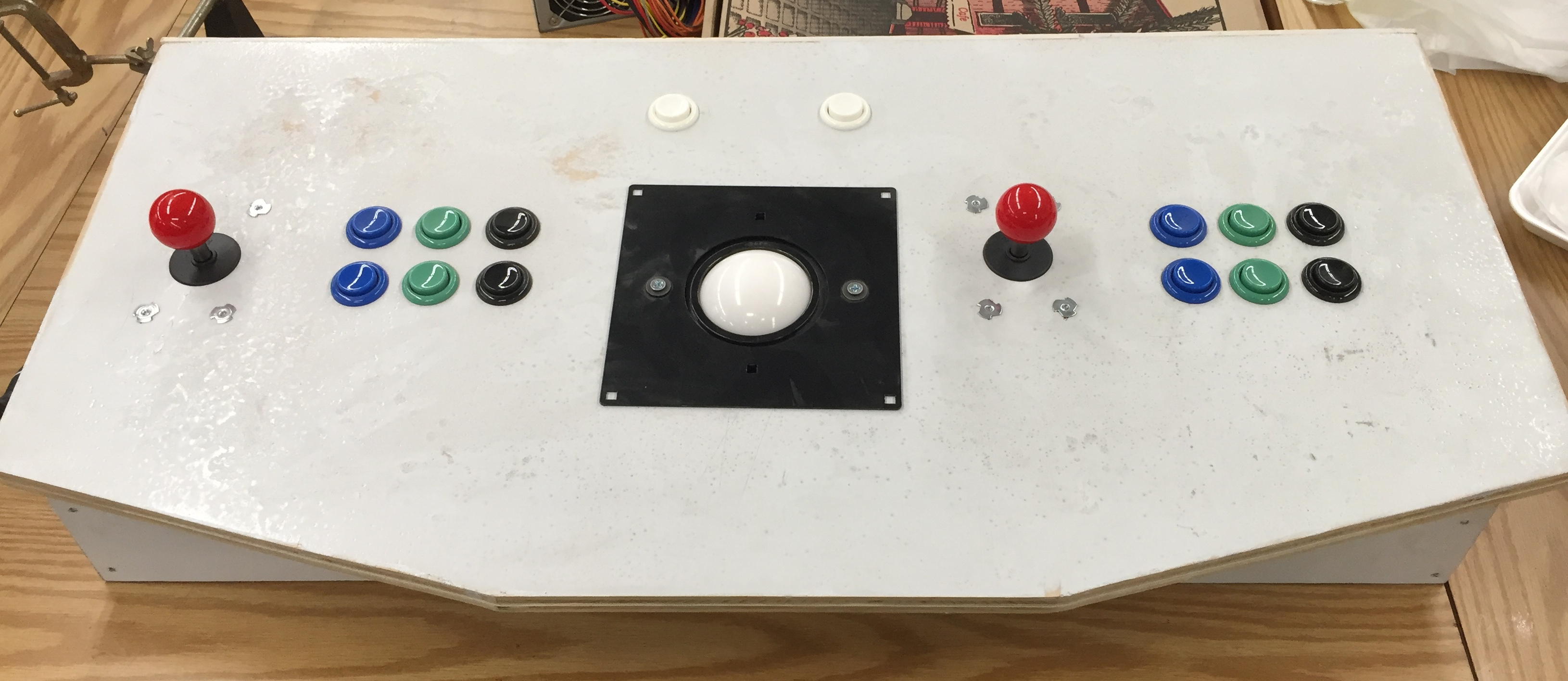
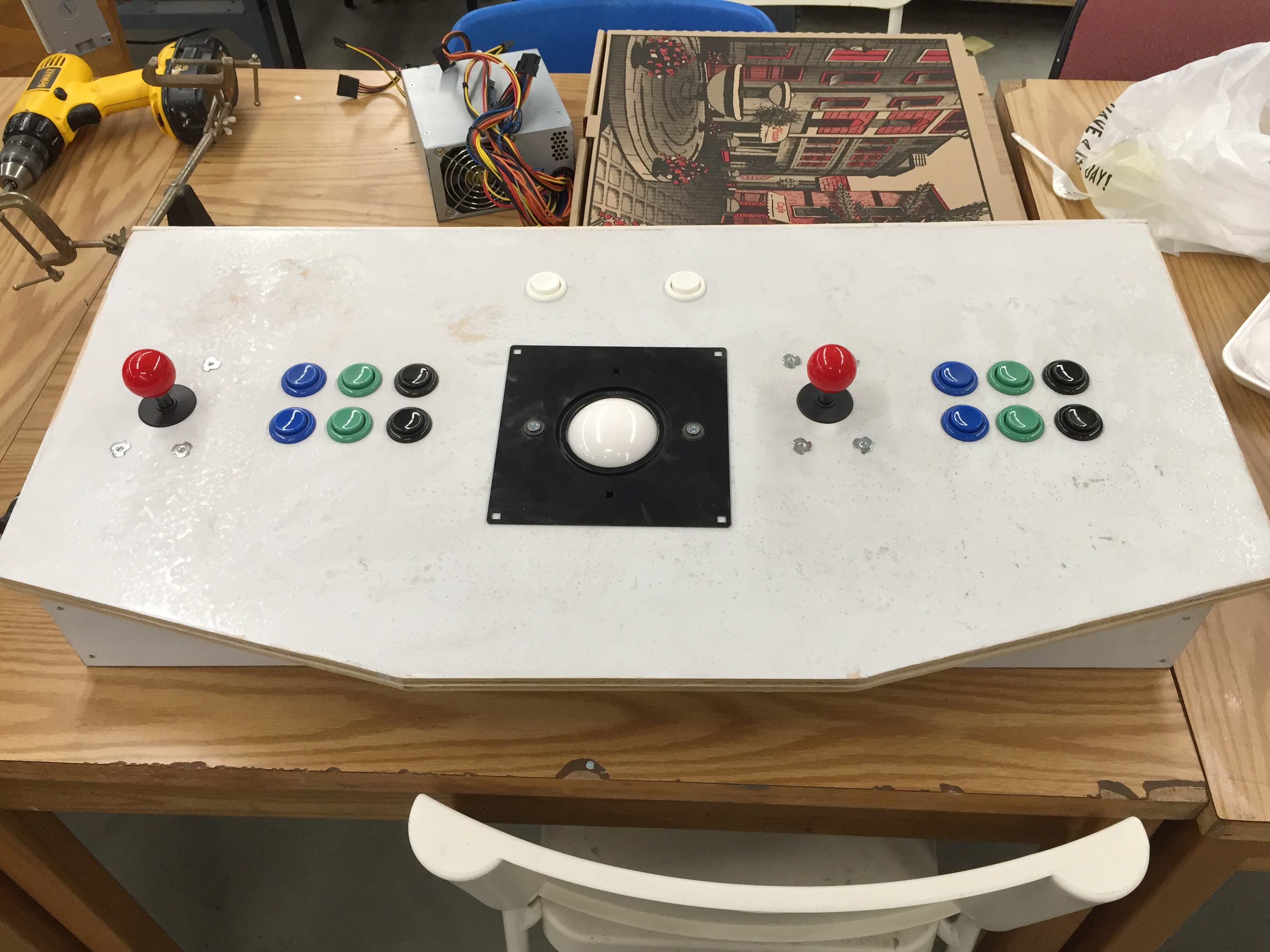
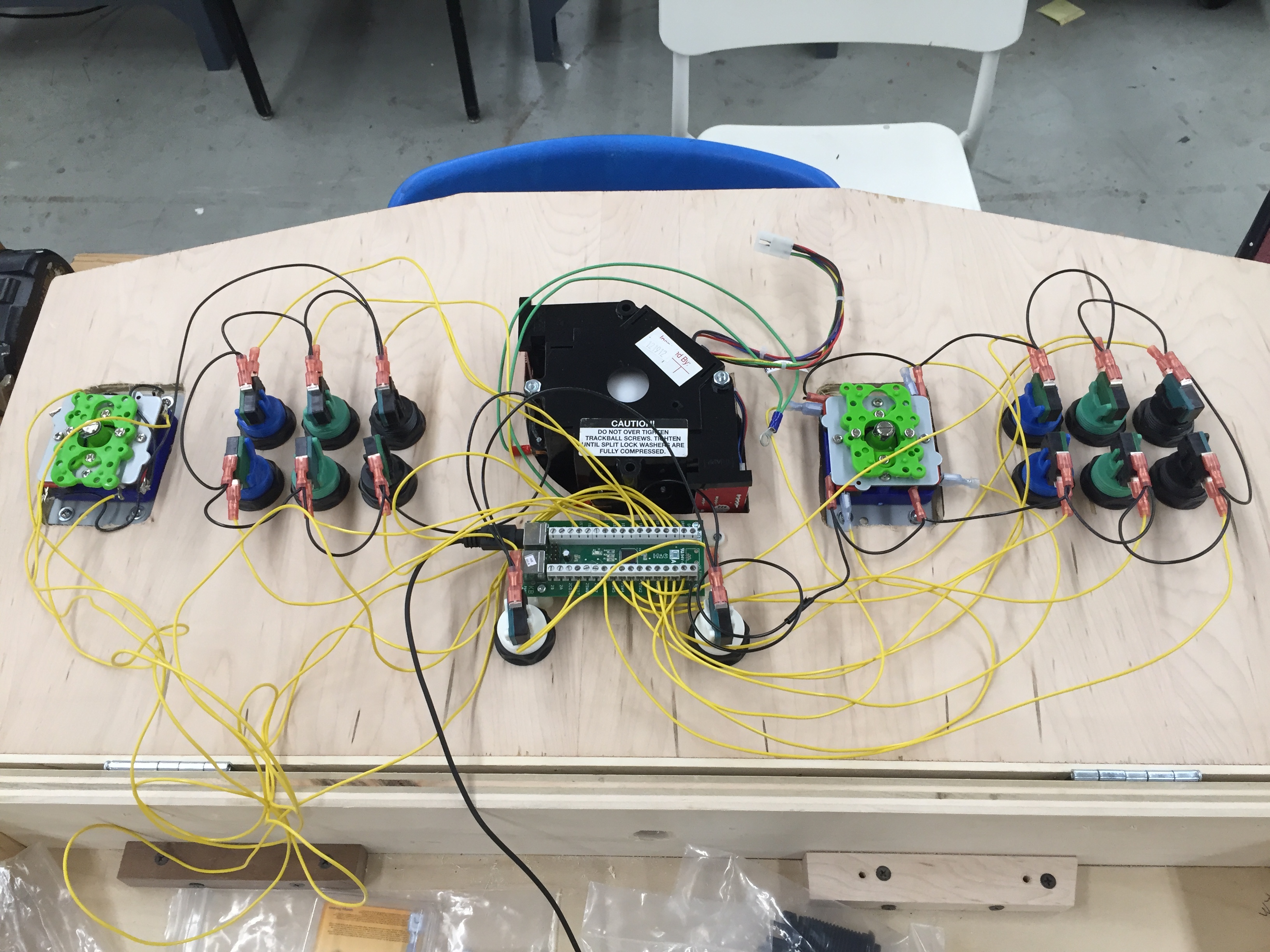
    Like most DIY posts nowadays, I’m leading off with the finished product: a mostly functional arcade control panel!

    I had a ton of help in basic woodworking skills from a few members in the makerspace.

    • Jack Walsh – How to cut shit on the table saw without murdering myself
    • Bill Taylor – Jigsawing for dummies
    • Steve Birmingham – More tablesaw tutelage, plus making my mitred edges actually fit
    • Chris Donius – Helping me put the damned thing together
    • Castro-Yves Arboite – Helping me with pictures and general artistic guidance

    I sourced the parts from all over.

    • Birch plywood – Home Depot
    • Buttons, Joysticks – Sparkfun
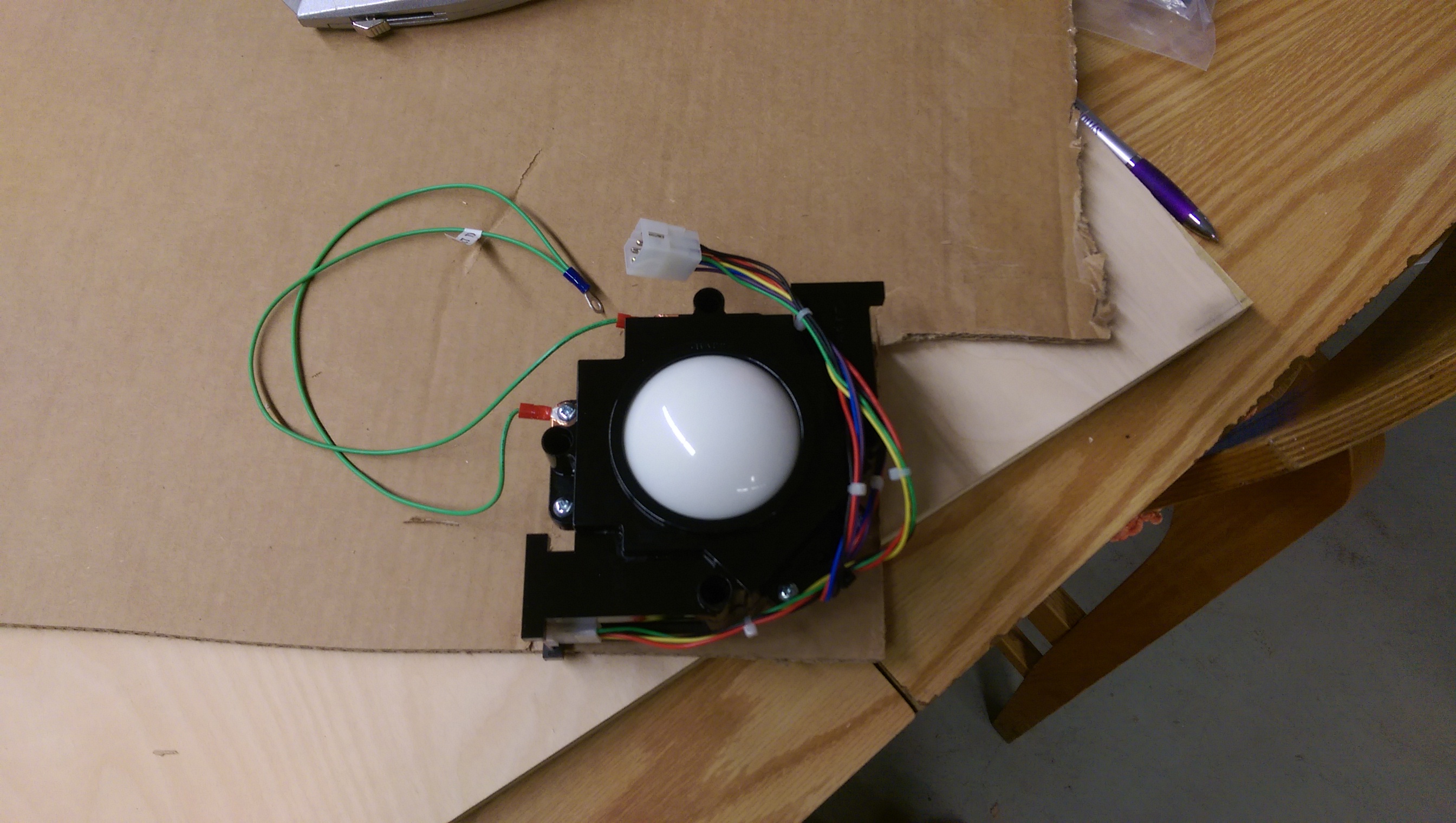
    • Track ball and plate – E-bay auctions
    • T-molding – T-molding.com

    With the aid and advice of my fellow makerspace members, this was built almost entirely from scratch.  Here’s a quick rundown of the build process.

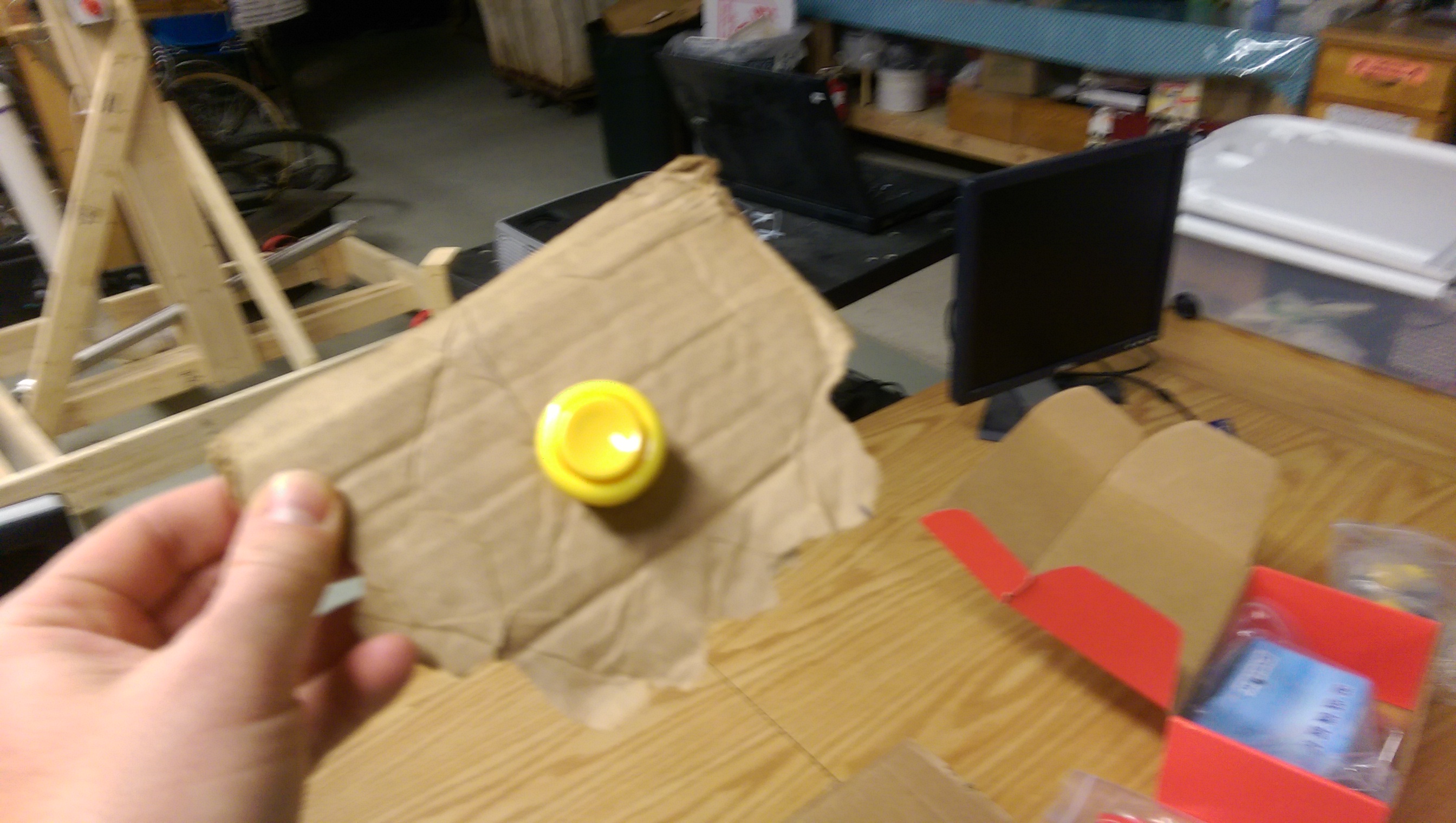
    imag0413

    I tested the button on cardboard.  I don’t remember why I thought this would be important or useful.  But I did.

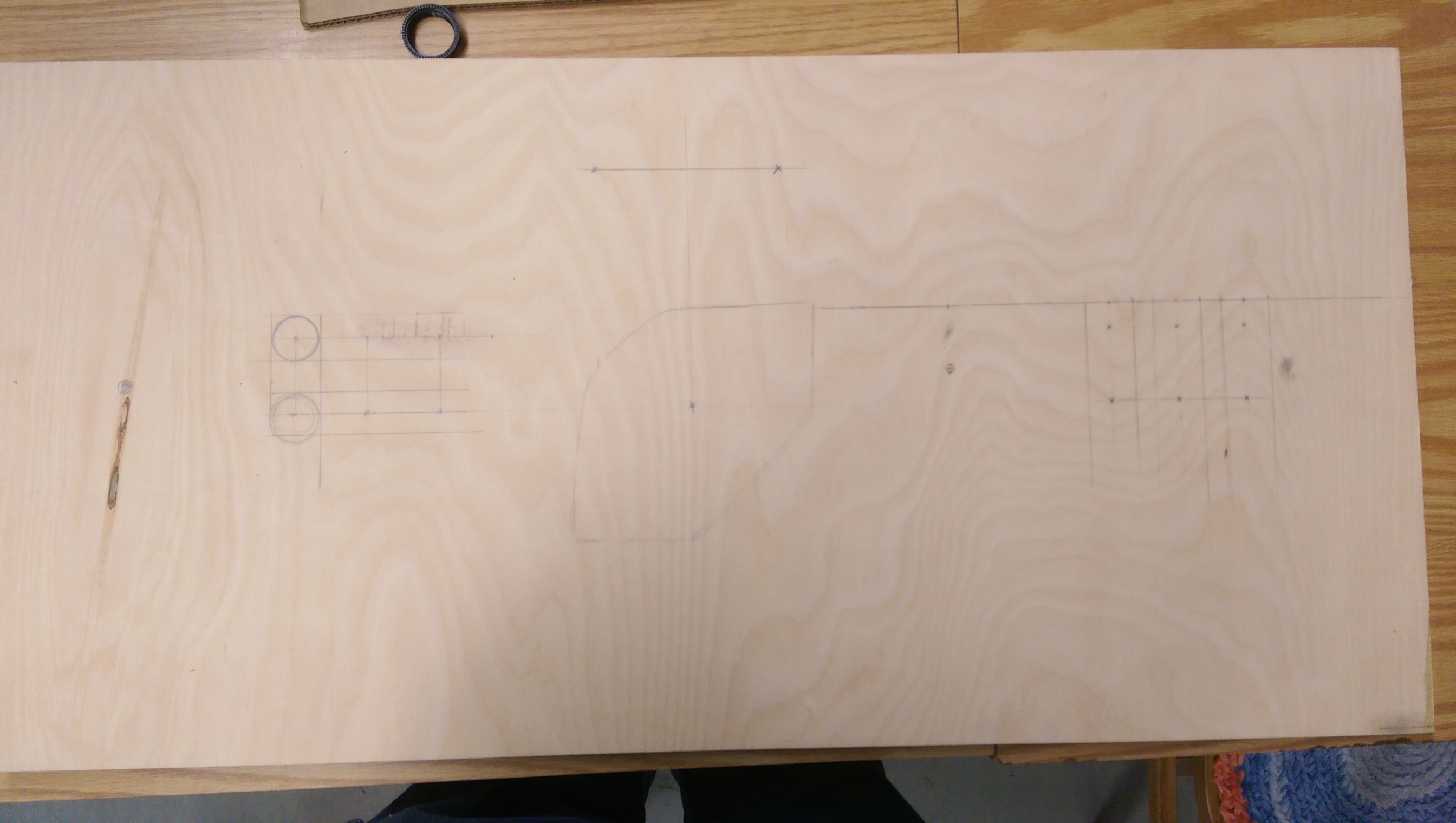
    imag0415

    My initial plan was to trace out the guide for the top panel layout on cardboard and cut out the holes.  But it turns out cutting a straight line on corrugated board is fucking impossible and I just gave up and went straight to pencil on the wood.

    imag0420

    I was told later that I could have made the process easier by tracing a guide and then folding it over halfway, seeing as it’s symmetrical.  Oh well.  Live and learn.

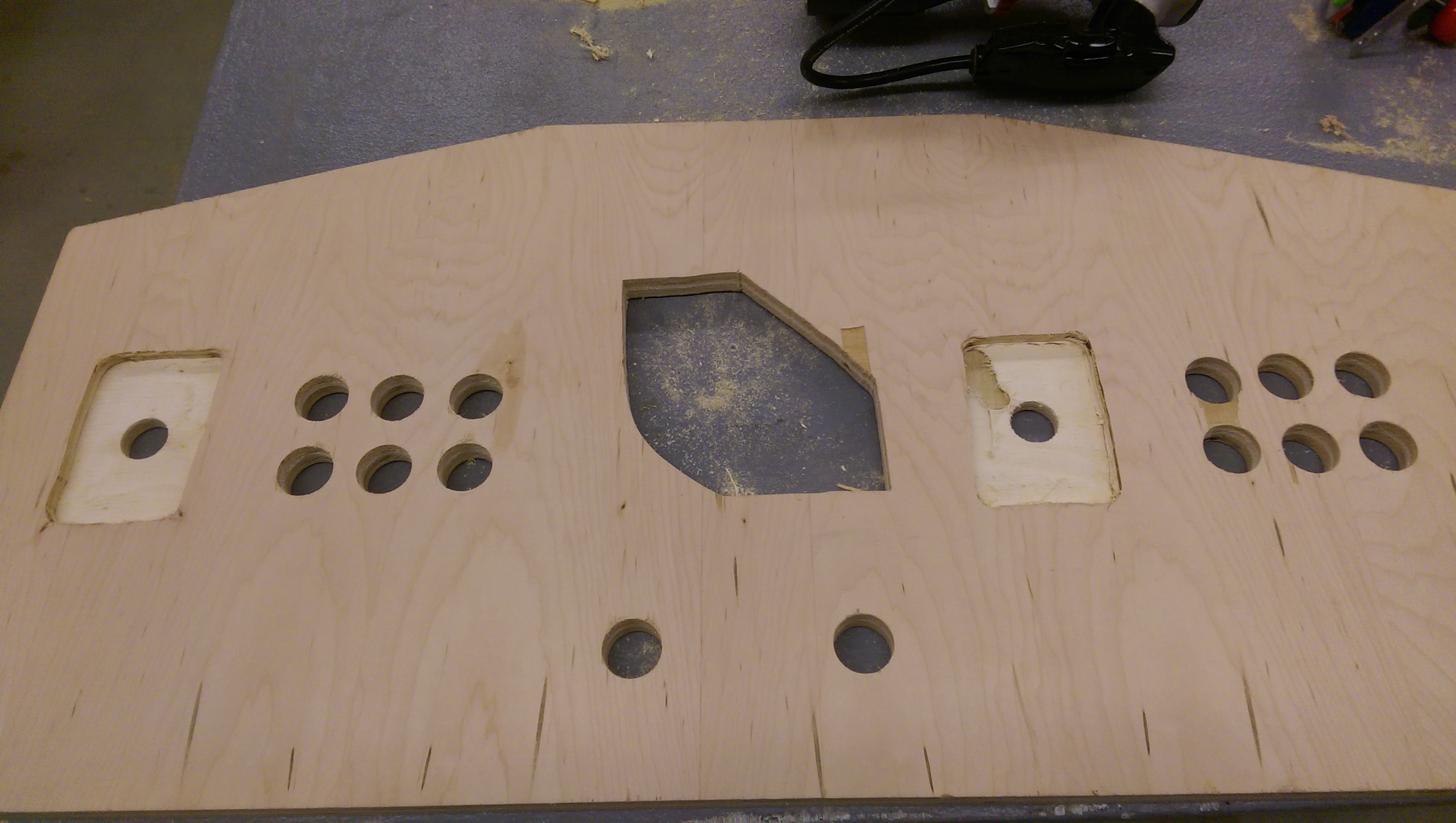
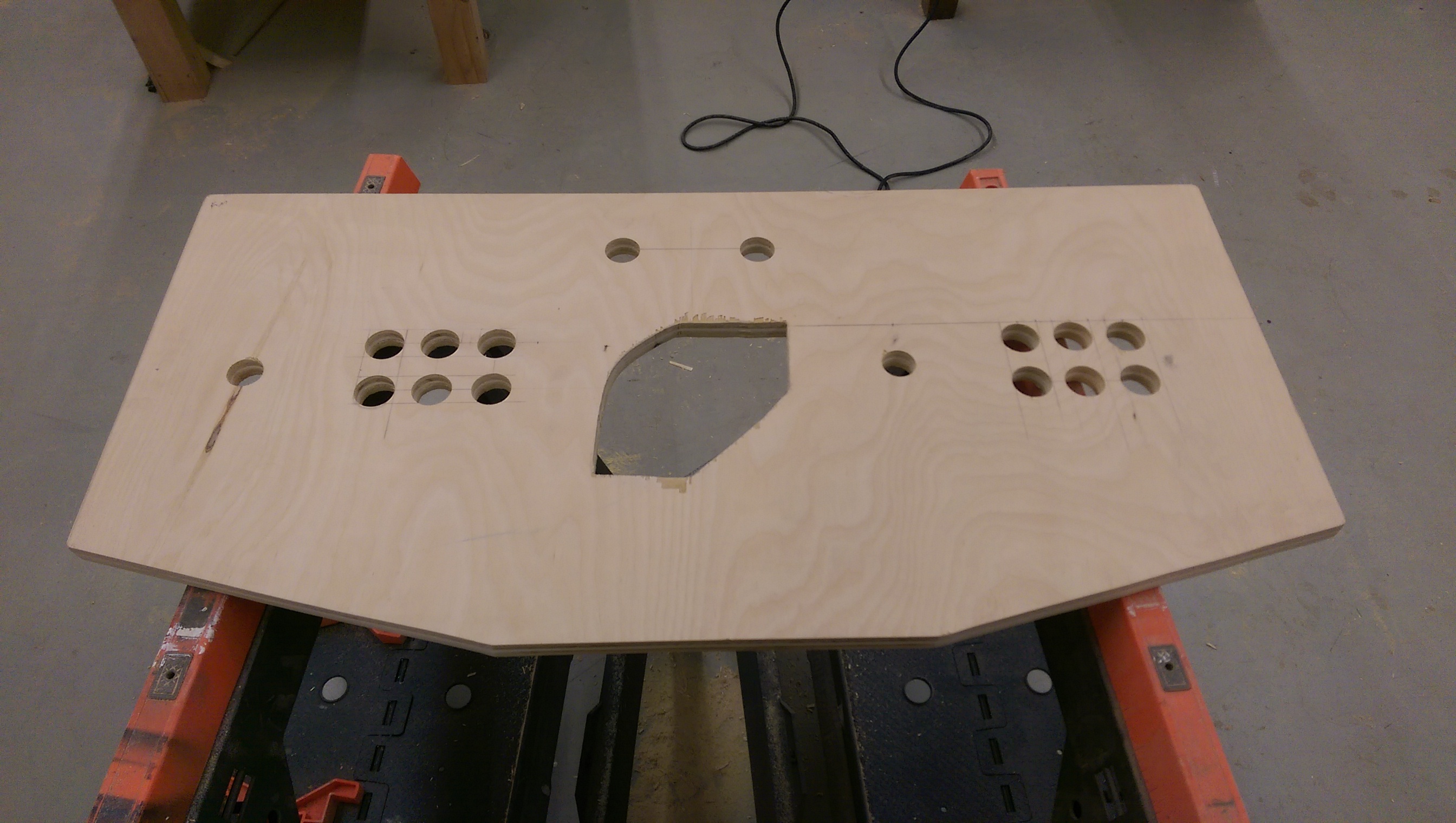
    imag0488

    Finished top panel.  Everything was going smoothly (pun intended) but then I bungled the trackball hole jigsawing, and got mad splintering everywhere.  Yeah, that again.  A little putty should patch it up.  It’s getting painted (or maybe even laminated) later, so I’m really trying not to sweat it.  The Forstner cuts for the button and joystick holes came out gorgeous, though, didn’t they?

    imag0477

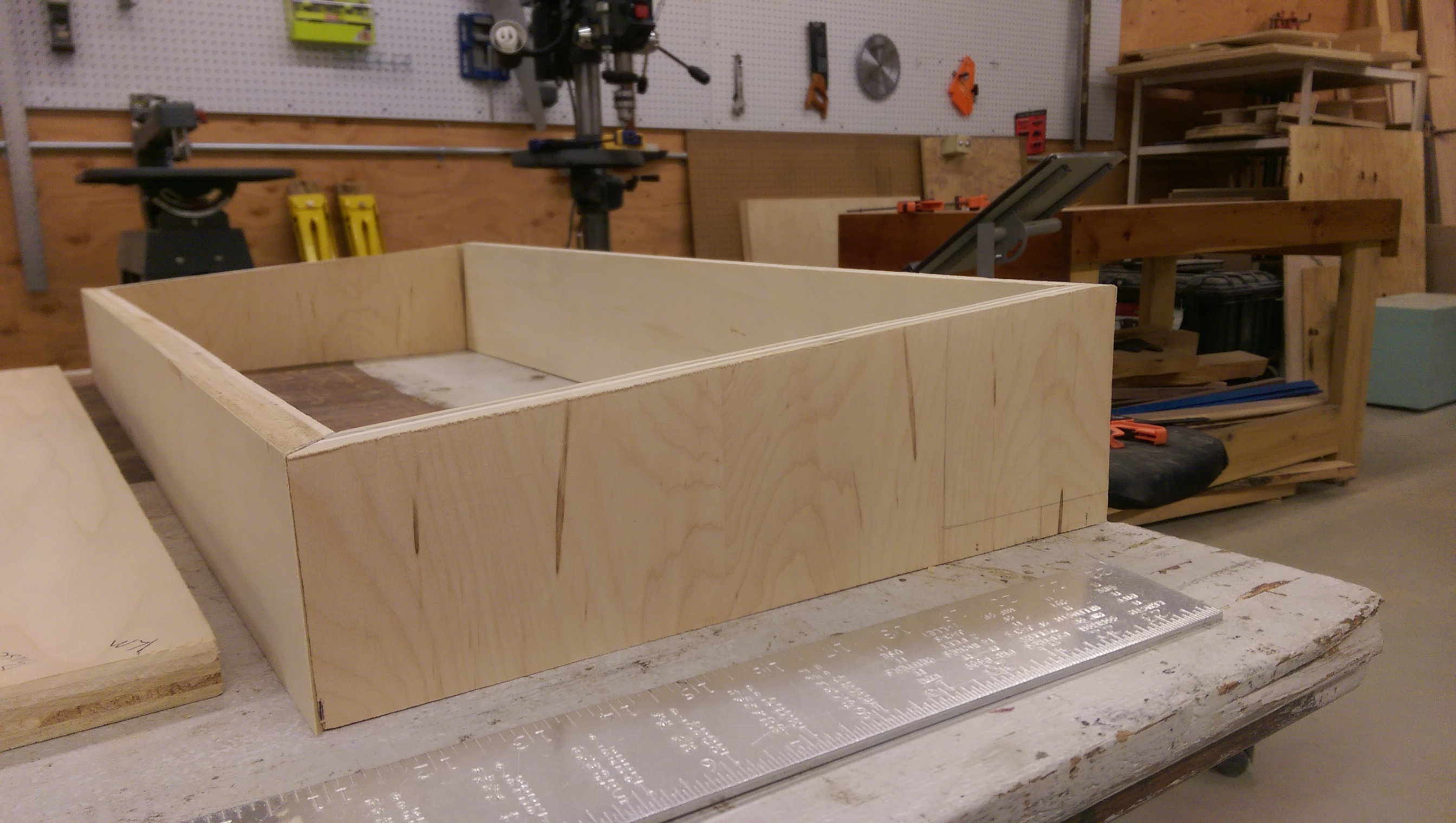
    The sides all meet at “mitred” edges, with the intention being to show no end grain wood.  This worked, but was a gigantic fucking pain in the ass because to fit this together, the angles need to be almost perfect.  Like, to the millimeter.  You can see I didn’t get it quite exactly right, but settled for a level of imperfection that’s invisible to the user (messy insides).

    imag0476

    The panel needs to be tilted towards the player.  So the back is taller than the front, and the sides have angled top edges.  Wound up doing more trigonometry than I would have expected.

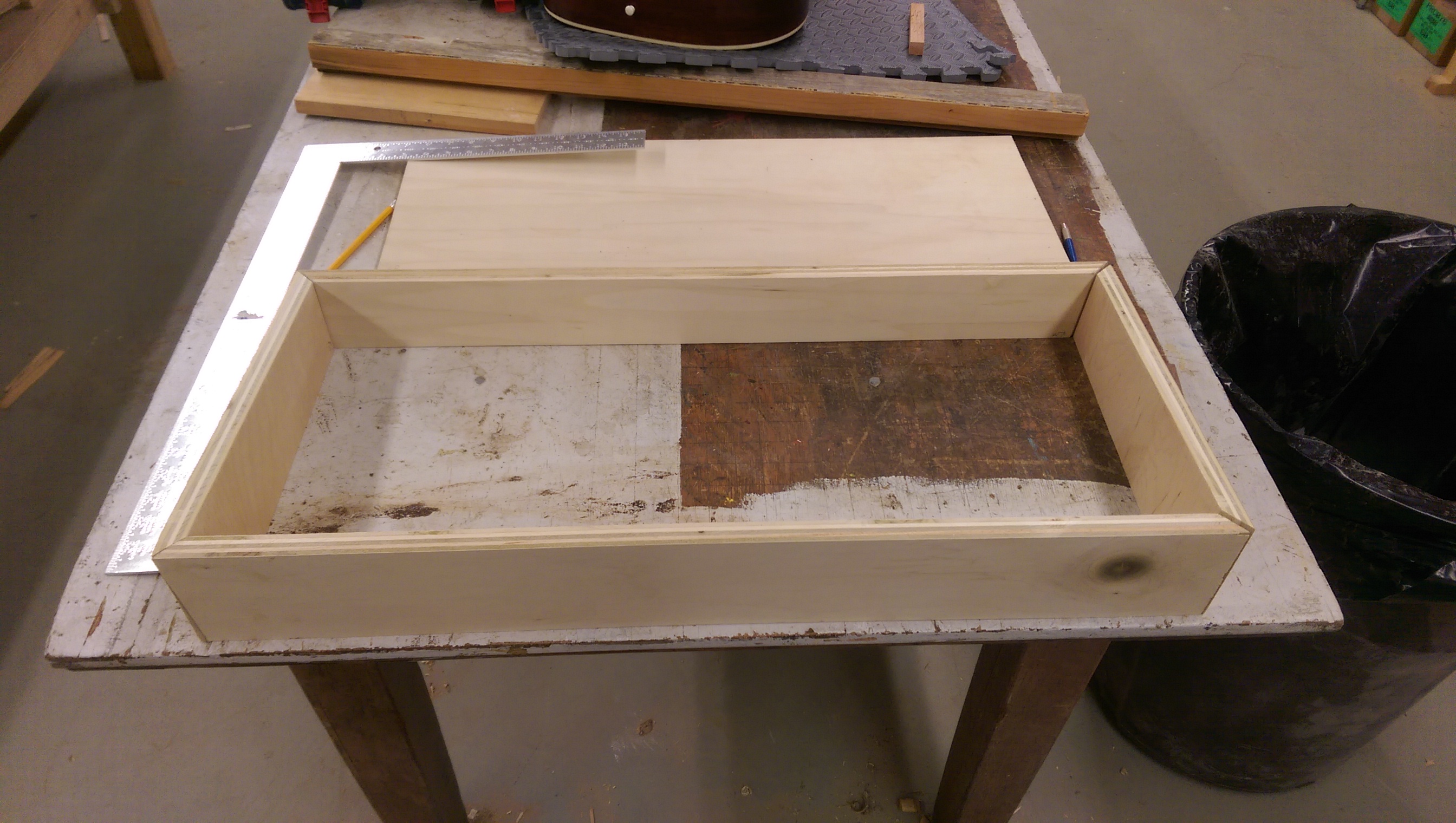
    imag0478

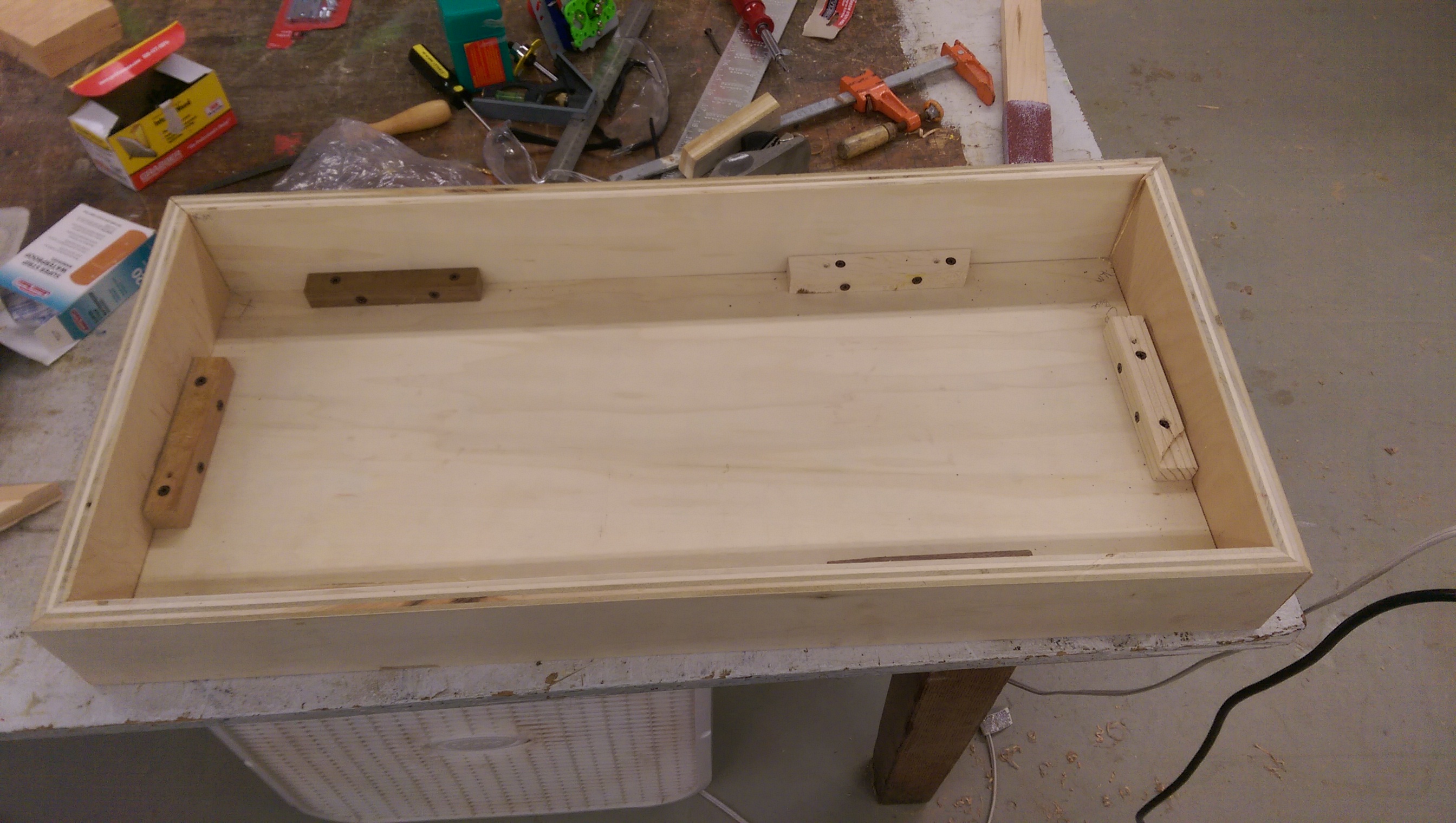
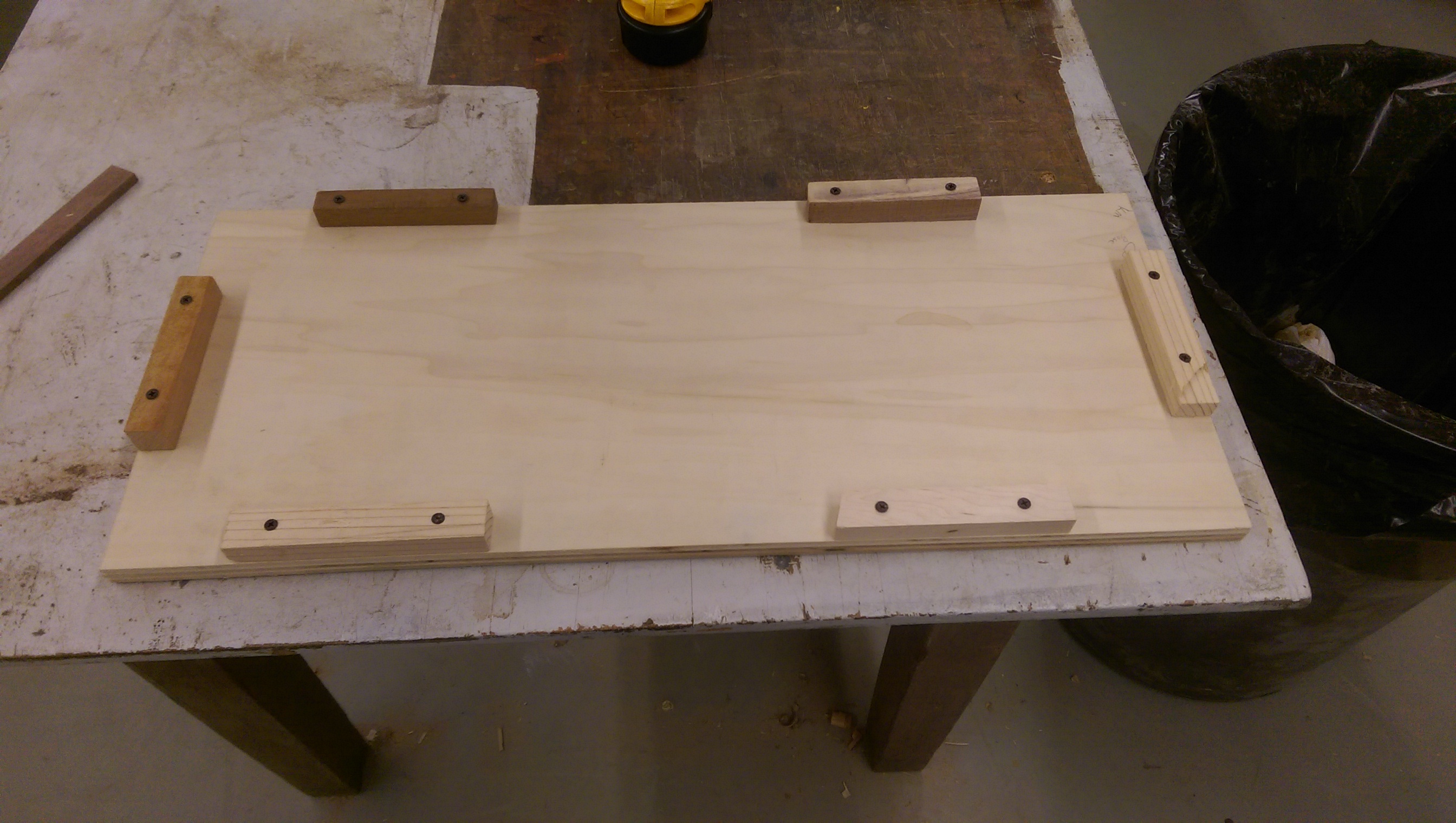
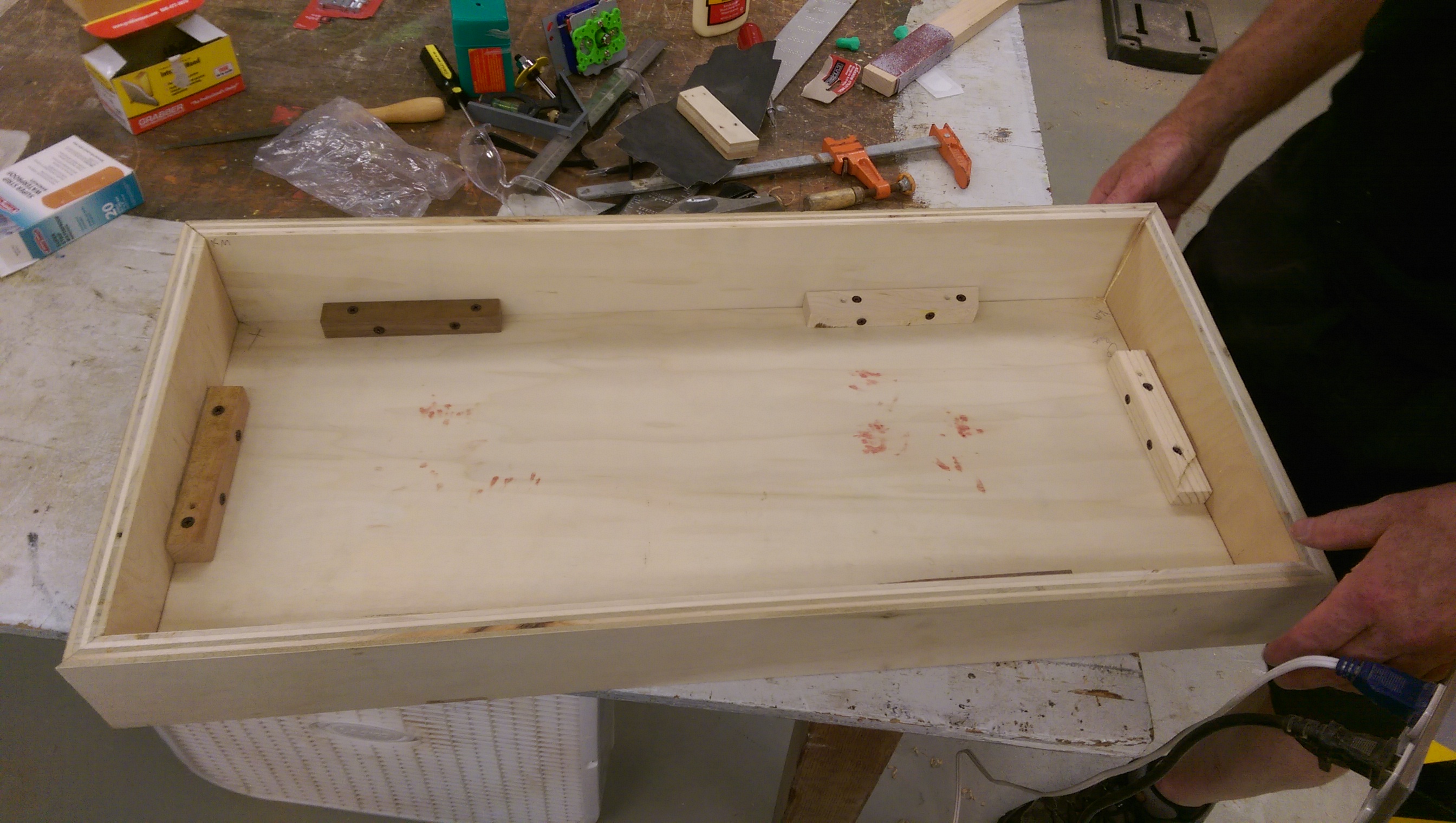
    The base.  The little pieces along the side are called “ledger boards” and they are what I used to attach the base to the sides without exposing any screw holes.  I grabbed them from random scraps around the space, which is why they are all different colors.  One of them turned out to be maple, which apparently has the same chemical properties as adamantium.  Whoops.

    imag0515

    Attaching the sides to the base via the ledger boards.  Chris bled on it.  My fault, really, for picking those pieces out of particularly dense wood.

    imag0516

    Nothing a little sanding couldn’t fix!

    imag0557

    Did I say the top was finished?  Because it wasn’t.  I had to use a router to cut out some of the wood around the joystick holes, on the underside.  This is necessary to give the joysticks a little more height, by giving it ⅜” of wood to get through, instead of ¾”.  The one on the left came out perfectly.  The one on the right went to shit because the router bit wasn’t properly tightened and dropped a smidge at the last second.  Oh well, another invisible flaw.

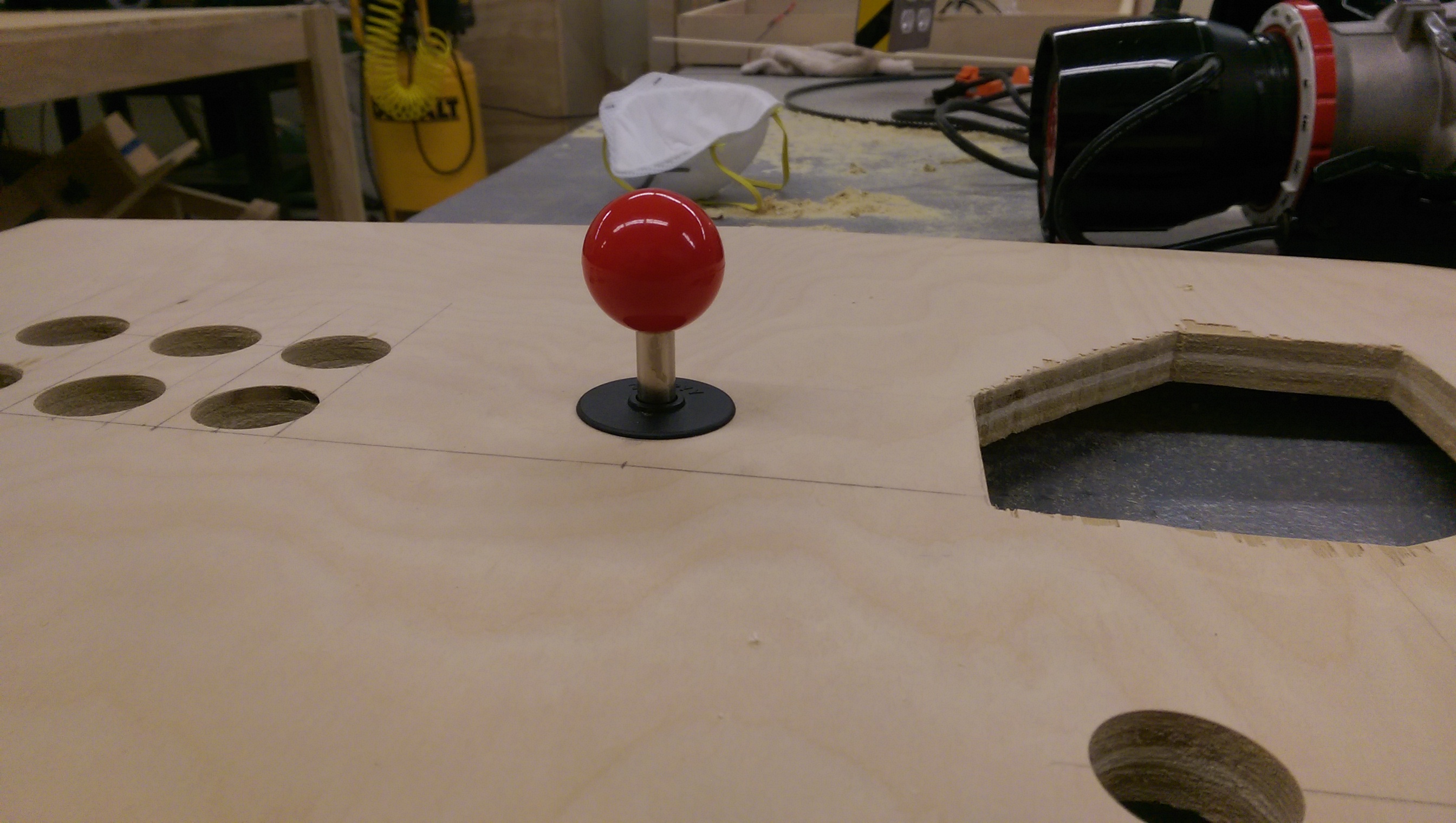
    imag0556

    Stand proud, little stick.

    img_7924

    I didn’t take enough pictures of the rest of the assembly process, but it’s pretty straightforward.  Hinges hold the top in place along the back edge.  Buttons and joysticks take their places: the buttons are just tightened by plastic nuts and are easy enough to remove, the joysticks are screwed from below.

    I tried to spray paint the exterior, but apparently some part of the spray painting process escapes me because the paint came out in shitty bursts and so it kind of came out looking like spotty garbage.  I’ll go over it again later.  Kind of gives it a beat up aesthetic in the meantime.

    Now, how does it all work?

    img_7925

    The buttons connect to a board called the IPAC-32 as TTL.  Which basically means there’s no need for me to worry about impedance or current or any of that analog crap.  One terminal of each button and joystick switch gets sent to a dedicated terminal on the IPAC, and the other ones share the same ground wire on a loop.  The IPAC converts the On/Off button transitions into simple keyboard scan codes, and connects to the host machine via USB.  So, as far as the host sees, it’s just getting keyboard presses/releases from the panel.

    The nice thing about the end result is that it’s so encapsulated.  It’s only output is a USB cable, so it really just looks like any other plug-in peripheral.  As such, it was easy to test.  Just plug in a Raspberry Pi with some emulation software on it, configure it for keyboard input (harder than it should have been), and give it a go.  A few minutes later, Snake Man was toast and I had myself a confirmed functioning control panel.

    I may add some video or stills of gameplay in action, if people are interested.

    This is a standalone component of a much larger project.